



For decades, modifying the power output of a modern turbocharged engine followed a familiar, software-driven path. You plugged a tuning tool into the OBD-II port, bypassed basic factory barriers and flashed a modified fuel and boost map directly onto the Engine Control Unit (ECU). It was clean, digital and relatively simple.
But those days are officially over. A massive wave of factory encryption has locked down modern engine management computers. Starting with advanced architectures across GM, Ford and Toyota, manufacturers have implemented hardware-level ECU encryption and Secure Gateway (SGW) modules. These systems verify the digital signature of the software on every startup. If you alter a single line of code, the car brick-locks itself.
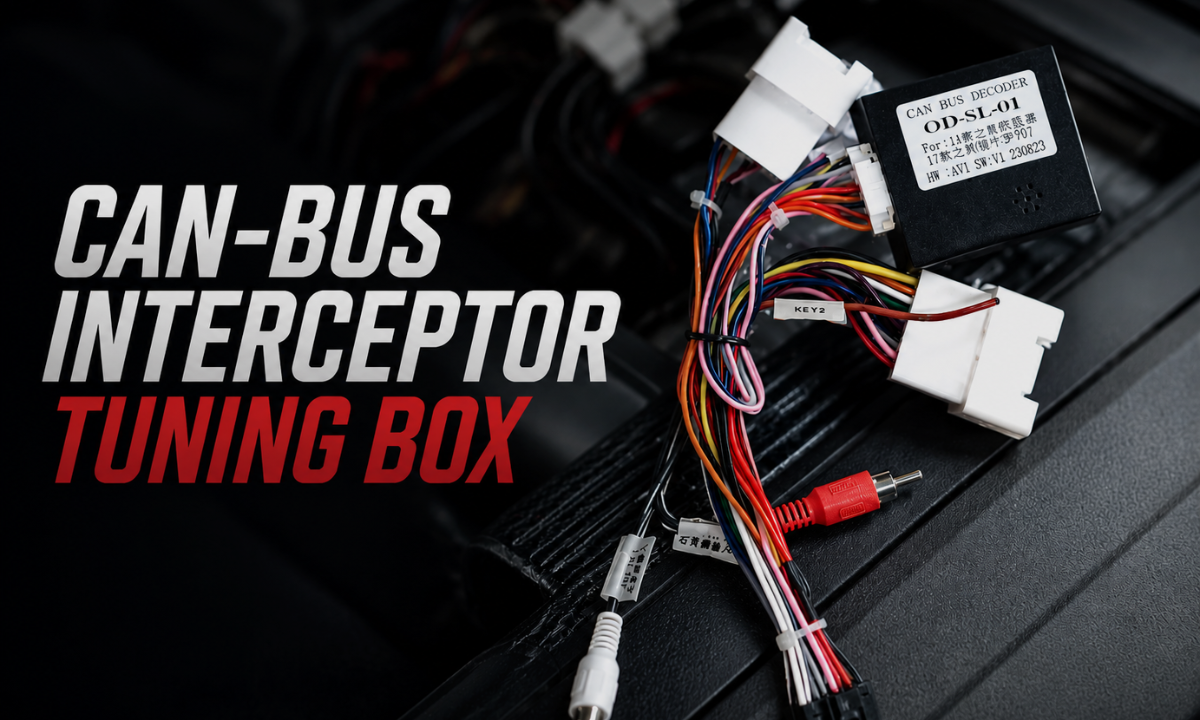
Faced with an uncrackable digital wall, the aftermarket tuning world has pivoted to a new physical battleground: CAN-bus signal interception.
Moving the Battle to the Network
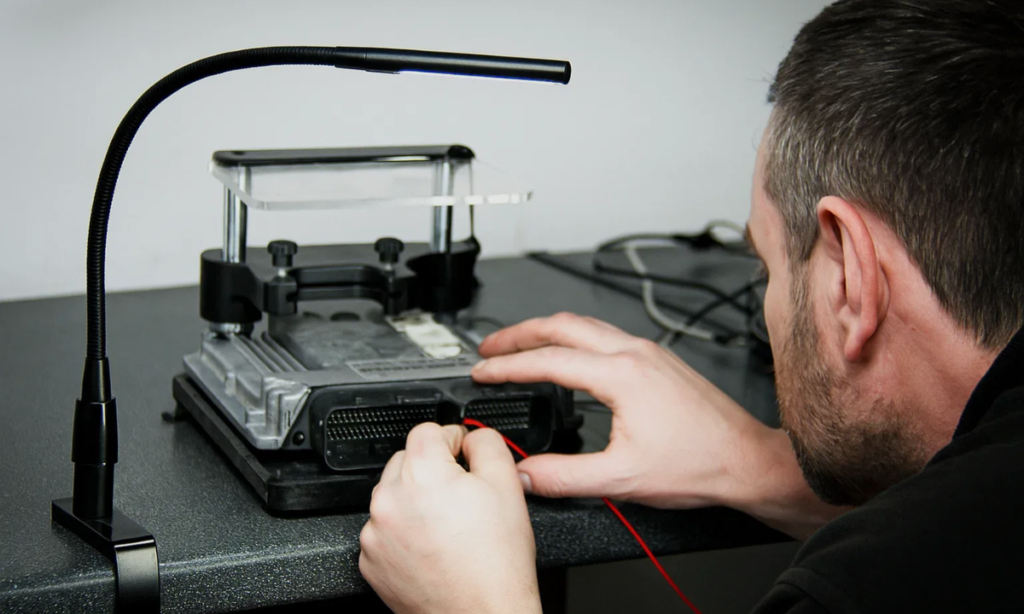
To understand this new wave of tuning, you have to look past the locked ECU and focus on the Controller Area Network (CAN-bus).
The CAN-bus is the internal highway of a vehicle, allowing different computers like the transmission controller, throttle body and absolute pressure sensors to constantly talk to one another.
Rather than trying to break the heavy military-grade encryption inside the locked ECU, aftermarket developers deploy physical “interceptor” boxes. These high-speed microprocessors are spliced directly into the wiring loom between the engine’s physical sensors and the ECU.
The interceptor box reads the analog and digital signals in real-time, instantly changes the data packet values and sends the altered signals to the ECU. For example, if the engine is running 20 PSI of boost, the interceptor alters the CAN-bus signal to read as 15 PSI. The locked factory ECU, thinking boost is low, automatically commands the wastegate to stay closed longer, safely delivering the extra performance without ever knowing its software has been fooled.
Factual Anatomy: Reflash Tuning vs. CAN-bus Interceptors
| Tuning Variable | Traditional OBD-II Reflash | Next-Gen CAN-bus Interceptor |
| Access Method | Diagnostic OBD-II Port | Direct physical wiring harness tap |
| ECU Status | Software rewritten/altered | 100% stock, untouched and locked |
| Data Control | Direct command over timing & fuel | Indirect manipulation via spoofed sensor signals |
| Detection Status | Leaves a permanent flash counter footprint | Physically removable; leaves no software trace |
| Hardware Required | Laptop or simple OBD handheld tool | Dedicated high-speed processor box |
The Speed Barrier: Why Latency is the Enemy
While intercepting signals sounds simple, doing it on a modern vehicle is an incredible engineering feat. Vehicles transmit thousands of CAN-bus messages every millisecond.
If an interceptor box takes too long to calculate and alter a signal, the delay triggers a communication mismatch fault on the vehicle’s high-speed safety bus. The ECU instantly recognizes that the timing of the sensor data is out of sync and throws the vehicle into a restrictive limp-home mode.
To bypass this, the newest generation of interceptor boxes use dedicated dual-core processors that can read, modify and transmit critical CAN-bus frames in under 150 microseconds faster than the factory computer can register the change.
The Verdict
The factory lockdown of automotive computers was supposed to be the death of the aftermarket tuning industry. Instead, it has sparked one of the most brilliant eras of creative hardware engineering we have ever seen. While we can no longer rewrite the code inside the brain of the car, we can successfully control the information it receives. For local builders looking to extract power from heavily protected 2026 powertrains, the CAN-bus interceptor isn’t just a clever alternative it is the only way forward.