


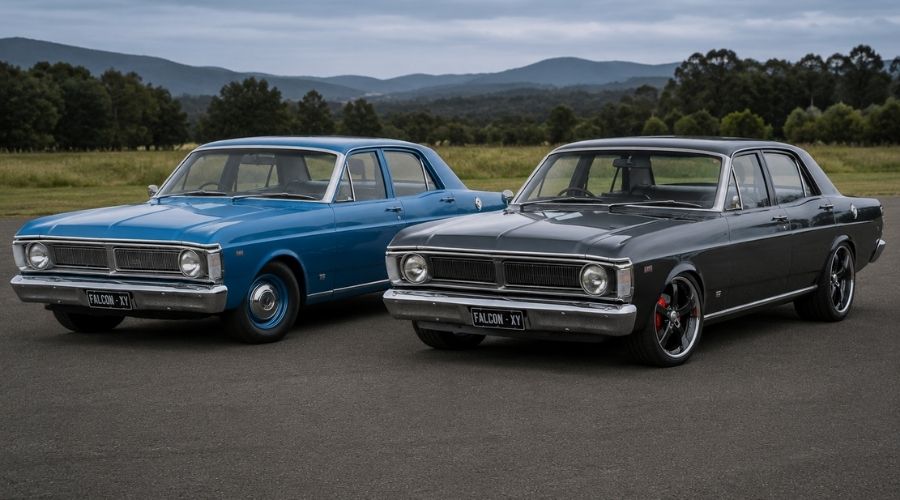

Few debates divide the Australian classic car community quite like the battle between pure factory originality and modern engineering.
On one side stand the originalists purists who insist every hose clamp, paint code and matching engine tag must mirror the exact day a vehicle rolled off the Broadmeadows or Elizabeth assembly line. On the other side are restomod advocates enthusiasts who believe vintage steel belongs on the open road, powered by modern crate V8s, electronic fuel injection (EFI), four-wheel disc brakes and icy air conditioning.
Historically, investors treated modifying a classic as a cardinal sin that destroyed resale value. But as collector demographics shift and specialist workshop labor costs rise, a new financial reality has taken hold across the Australian market.
Which strategy actually yields a better financial return: preserving a factory original or building a high-end restomod?
The 2026 Market Shift: Drivability Commands a Premium
The classic car market has undergone a fundamental valuation shift. While ultra-rare, museum-grade homologation specials (like a genuine Ford Falcon GT-HO Phase III or Holden Torana A9X) will always command peak blue-chip money in original form, the broad middle tier of the market tells a completely different story.
For common-spec classics such as standard Falcon 500s, Holden Kingswoods, Valiant Regal coupes and early Mustangs buyers are increasingly rejecting finicky carburetors, heavy manual steering and drum brakes in favor of modern reliability.
Today’s buyers want vintage styling paired with modern capability. As a result, professionally built restomods based on standard classic platforms frequently sell for 1.5x to 2x more than their factory-spec counterparts at public auctions and private sales.
Two Case Studies: Original vs. Restomod
To understand where the money goes, consider two real-world build paths using a standard 1970 Ford Falcon XY sedan as a benchmark:
Case Study 1: The Factory-Original Concours Restoration
- The Build: Restored meticulously to factory 1970 specifications. Powered by a rebuilt 250-cubic-inch inline-six or standard 302 V8, drum brakes, single-barrel carburetor and original 3-speed automatic transmission.
- The Reality: The car is an authentic piece of history, but requires constant mechanical tuning to run smoothly. Vapor lock on hot summer days and sluggish braking make highway cruising nerve-wracking. It sits in a garage under a soft cover, driven fewer than 300 km per year to protect its condition.
- Financial Trajectory: Slow, steady appreciation tied to inflation and local brand nostalgia. High ongoing maintenance costs for specialized vintage mechanicals eat into long-term profit margins.
Case Study 2: The Professionally Engineered Restomod
- The Build: Retains the iconic 1970 XY body, but incorporates an All-Alloy 5.0L Ford Coyote V8 engine, 6-speed automatic transmission, coilover suspension, Wilwood 4-wheel disc brakes, power steering and modern interior climate control.
- The Reality: Fires up on the first turn of the key, cruises comfortably at 110 km/h on interstate highways with modern fuel efficiency and stops like a modern sports sedan. The owner logs 4,000+ km a year taking family road trips and attending weekend events.
- Financial Trajectory: High initial build expense, but commands a massive buyer pool upon resale. Turnkey usability creates rapid sales liquidity, with buyers willing to pay top dollar to bypass multi-year workshop build queues.
Financial Comparison Breakdown
When evaluating long-term financial performance, you must measure total cost of ownership rather than purchase price alone:
| Financial Metric | Factory Original (Mid-Tier Classic) | High-End Professional Restomod |
| Donor Vehicle Entry Cost | Moderate to High (Requires intact matching numbers) | Lower (Can start with a clean, base-model shell) |
| Restoration / Build Expense | $80,000 – $140,000 AUD (Sourcing rare NOS parts) | $150,000 – $250,000+ AUD (Modern components & engineering) |
| Annual Maintenance Overhead | High (Finicky carbs, oil leaks, ignition points) | Low (Modern crate engine servicing & modern electronics) |
| Resale Liquidity (Ease of Sale) | Moderate (Appeals primarily to traditional purists) | High (Appeals to broad, younger demographic wanting turn-key cars) |
| 5-Year Value Projection | Steady growth (+3% to +5% p.a.) | Strong retention; high premium for top-tier shop builds |
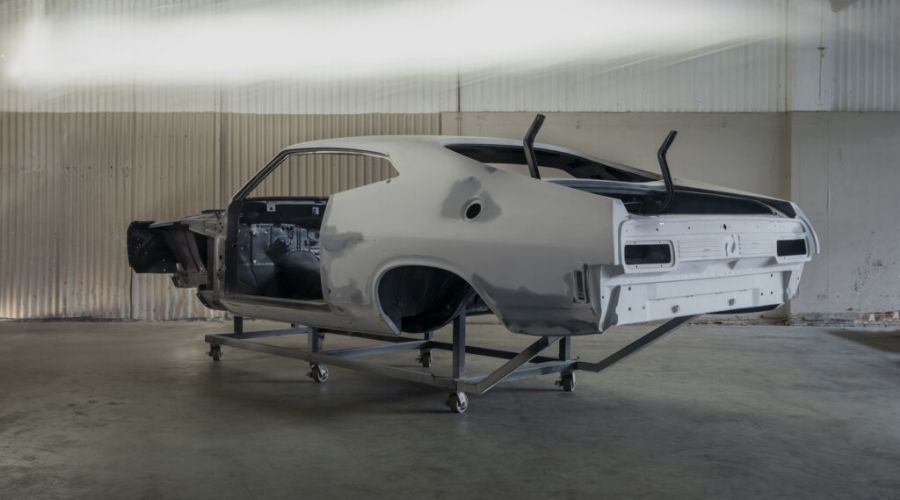
Quality Is Everything: Why Bad Restomods Lose Money
While a top-tier restomod can yield an exceptional return, low-quality or overly personalized modifications destroy value quickly.
The Golden Rule of Restomod Value:
Modifications add financial value only when they improve safety, reliability, chassis dynamics, or comfort without ruining the car’s classic silhouette.
| VALUE-ADDING MODS | VALUE-KILLING MODS |
| Modern EFI Crate Engine | Irreversible Body Hacks & Cheap Widebodies |
| Upgraded Disc Brakes & ABS | Low-Quality Custom Interior Trim |
| Independent Rear Suspension / Coilovers | Overly Aggressive or Niche Paint Colors |
| Integrated Vintage Air Conditioning | Poorly Integrated Aftermarket Wiring Looms |
Work done by reputable, certified engineering shops with full state compliance (such as VASS certificates in Victoria or Mod Plates in Queensland) holds value because future buyers trust the safety and legality of the build.
Decision Framework: Which Path Should You Choose?
Use this decision matrix to determine the smartest financial strategy for your prospective build or purchase:
Is the car an ultra-rare, factory-tagged “Blue Chip” survivor?
YES ➔ KEEP ORIGINAL. Modifying a genuine Monaro GTS, GT-HO, or A9X destroys provenance.
NO ➔ Do you intend to drive the car more than 3,000 km per year?
YES ➔ RESTOMOD. Modern brakes, EFI and cooling deliver far superior ownership value.
NO ➔ RESTORE ORIGINAL. Perfect for static display, car club judging and purist appreciation.
The Future Outlook
As younger generations (Millennials and Gen Z) become the dominant buyers in the classic car market, the demand for restomods will continue to outpace traditional restorations. Accustomed to modern vehicles that start effortlessly and handle predictably, these buyers view restomods not as sacrilege, but as the ultimate fusion of timeless style and modern performance.
For investors, the takeaway is clear: unless you hold an irreplaceable piece of top-tier motoring history, investing in high-quality, drivable modern engineering is the smartest way to ensure your classic vehicle holds its value and brings genuine enjoyment for decades to come.