


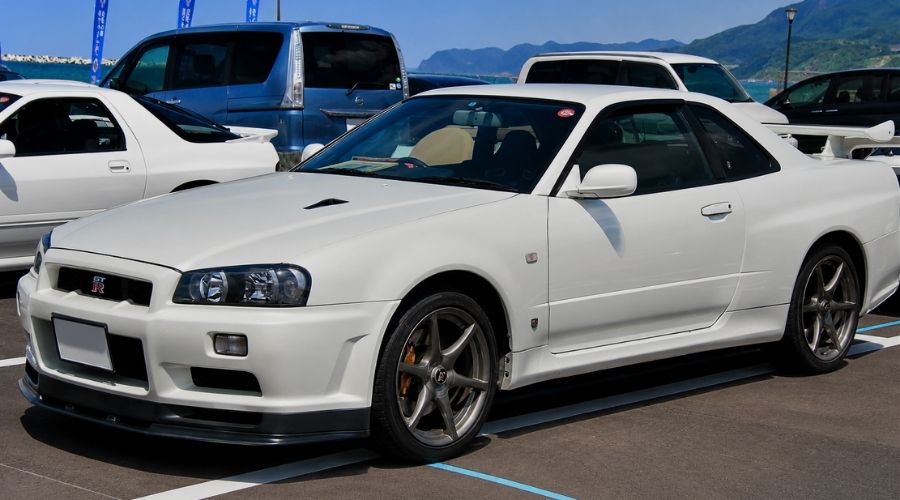

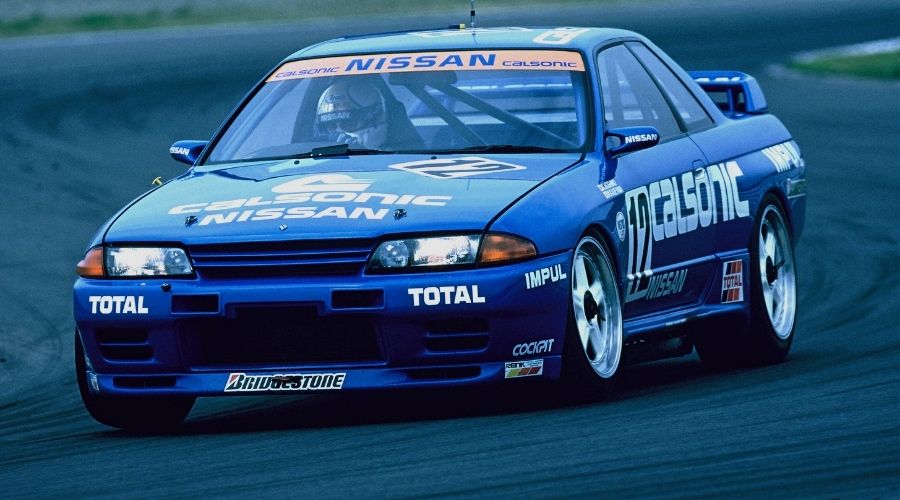
Few automobiles have transformed from budget track weapons into blue-chip global financial assets quite like the Nissan Skyline GT-R. Born out of Japan’s Group A touring car dominance in the late 1980s, “Godzilla” earned its legendary status on Australian soil when the R32 GT-R flattened local V8 opposition at Mount Panorama in 1991 and 1992.
Fast-forward to today: driven by pop-culture nostalgia, video-game fame and the rolling opening of the United States 25-year import rule, the Skyline GT-R is Australia’s most coveted imported performance car.
However, with prices having surged to record highs before settling into a more mature trading range, perspective buyers face a high-stakes decision: Is it time to pull the trigger, or should you wait for a market pullback?
Market Fundamentals: Supply, Demand and the US Shift
Understanding GT-R pricing requires analyzing global liquidity rather than just local Australian classifieds.
1. Global Demand & The US 25-Year Rule
The biggest driver of GT-R price escalation over the last decade has been the United States’ 25-year import exemption rule.
- R32 GT-R (1989–1994): Became US-legal starting in 2014, causing an immediate wave of American buyers to absorb global supply.
- R33 GT-R (1995–1998): Opened up to the US market between 2020 and 2023, causing a sharp upward re-evaluation of a chassis previously considered undervalued.
- R34 GT-R (1999–2002): Reached full eligibility, bringing US-dollar capital directly into competition with Australian collectors.
2. Australian Supply Reality
Australia was one of the few export markets to receive a small allotment of official factory-delivered R32 GT-Rs (100 units in 1991). The vast majority of GT-Rs in Australia, however, entered via gray-import channels across the late 1990s and 2000s.
Because many of these vehicles were modified, driven hard on tracks, or lost to crashes over two decades, the pool of clean, rust-free, matching-numbers GT-Rs in Australia is strictly finite and shrinking every year.
Generation Breakdown: R32 vs. R33 vs. R34
| GT-R Generation | Production Years | Total Built | Australian Market Range (AUD) | Long-Term Appreciation Profile |
| R32 GT-R (BNR32) | 1989–1994 | ~43,937 | $75,000 – $130,000+ | Steady Blue Chip. Pure motorsport lineage; accessible entry point for an authentic RB26. |
| R33 GT-R (BCNR33) | 1995–1998 | ~16,668 | $95,000 – $145,000+ | High Growth Potential. Stiffer chassis and longer wheelbase; widely viewed as the sweet spot for driving dynamics. |
| R34 GT-R (BNR34) | 1999–2002 | ~11,578 | $150,000 – $350,000+ | Ultra-Premium Asset. Pinnacle of analog JDM design; V-Spec II, Nür and M-Spec editions command $400k–$1M+. |
The Hidden Ownership Costs Nobody Mentions
Buying a GT-R isn’t just about handing over the purchase price. The ongoing holding costs for these 25-to-35-year-old performance platforms require serious budget planning:
1. Import Duties, Taxes, & Compliance (SEVS)
If importing directly from Japanese auctions:
- Customs Duty & GST: 5% Customs Duty + 10% GST calculated on the landed cost (CIF).
- Luxury Car Tax (LCT): Applies at 33% on values exceeding the LCT threshold ($71,849 for standard vehicles). Crucial Exemption: Vehicles 30 years or older qualify for LCT exemption under Schedule 4 Item 36, making early R32s and early R33s significantly cheaper to import.
- RAW Compliance & ROVER Registration: Workshop compliance, safety checks and roadworthy engineering cost between $3,000 and $8,000 AUD.
2. The “RB26 Tax” & Maintenance Overhead
The legendary 2.6-litre twin-turbo engine is a mechanical masterpiece, but keeping it healthy requires specialized care:
- Factory Weak Points: Stock ceramic turbo wheels (prone to disintegrating at high boost), oil-pump starvation under high RPM and individual throttle body synchronization.
- Parts Pricing: While Nissan’s NISMO Heritage Parts program reproduces factory components, original trim, panels and mechanical parts carry a significant premium.
- Specialist Labor: Specialist workshops charge $150 – $220+ per hour for qualified RB26 diagnostic work.
3. Insurance & Secure Storage
Enthusiast agreed-value insurance policies (e.g., Shannon’s or Lumley) for a $150,000 GT-R typically cost $2,500 – $4,500 AUD annually, contingent on garaging details, driving history and strict kilometer limits.
Investment Scenarios: Best, Worst and Realistic Cases
BEST CASE (+8% to +12% p.a.)
Global liquidity stays high; pristine stock examples become museum-grade assets.
REALISTIC CASE (+3% to +6% p.a.)
Market stabilizes; quality GT-Rs outpace inflation while modified “drivers” hold flat.
WORST CASE (-10% to -15% Drawdown)
Macroeconomic downturn tightens luxury cash; high-mileage/modified builds lose liquidity.
- Best Case: Unmodified, low-mileage, rare-color examples (e.g., Midnight Purple R33s or Bayside Blue R34 V-Specs) continue to behave like alternative art/watch investments, appreciating steadily as global collectors lock them away.
- Realistic Case: The general market consolidates. Well-maintained cars beat inflation, providing a solid store of capital while delivering immense weekend enjoyment.
- Worst Case: Heavily modified, accident-repaired, or high-mileage GT-Rs experience price softening as buyers demand complete history and originality.
Decision Framework: Should You Buy Now or Wait?
BUY NOW IF:
- You are targeting a factory-original or tastefully restored example with verified mileage and zero structural rust.
- You have cash reserves to cover specialized insurance, proper garaging and a $10,000 maintenance buffer.
- Your primary motivation is driving and enjoying an automotive legend, treating financial growth as a secondary benefit.
WAIT IF:
- You are stretching your personal budget to the limit just to meet the purchase price.
- You are looking at heavily modified, non-matching-numbers, or rust-repaired examples hoping for a quick speculative flip.
- You expect instant double-digit annual returns.
How and Where to Source a GT-R
- Japanese Auctions (via Licensed Import Agents): Offers the widest selection, but requires a strict pre-purchase JEVIC inspection and full translation of the original auction sheet to spot hidden rust or structural repairs.
- Specialist Local Dealers: Higher upfront purchase price, but provides immediate local inspection, clear title (PPSR check) and established Australian road registration.
- Private Enthusiast Sales: Inspect via a dedicated RB26 specialist who can perform compression checks, endoscope cylinder inspection and verify original chassis tags.
The Verdict
The era of cheap $30,000 Skyline GT-Rs is gone forever. While the speculative bubble has cooled into a stable market, the fundamental equation remains unchanged: supply is fixed, global demand is strong and the GT-R’s cultural legacy is permanent.
If you have the capital and find a clean, well-documented example, buying now is far wiser than trying to time the market. Buy for the passion of the drive first the market history proves the rest usually takes care of itself.