


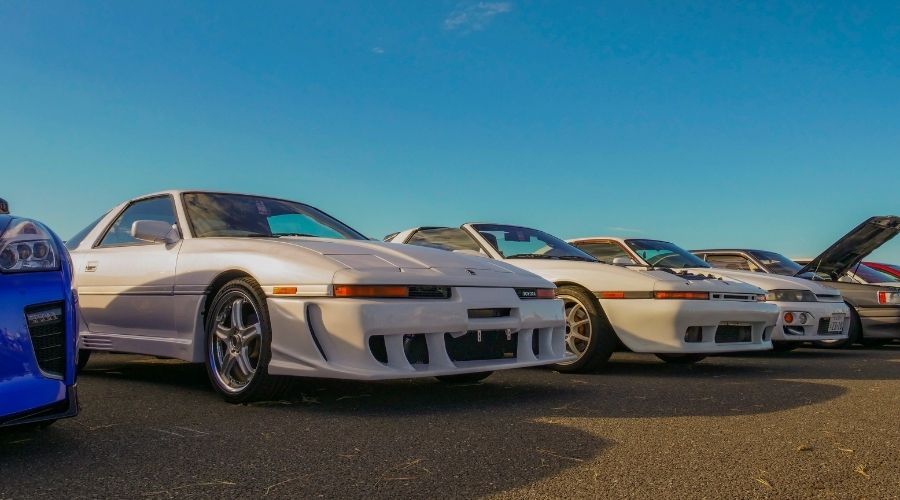

For decades, the classic car narrative in Australia was set in stone. If you wanted a serious collector vehicle, you bought a 1960s or 1970s V8 a Falcon GT, a Holden Monaro, or a Charger with a rumbling carburettor and chrome bumpers.
Today, walking through any weekend car meet reveals a massive generational guard change.
The cars drawing the largest crowds, commanding high-tier auction results and filling enthusiast garages aren’t heavy 70s iron. They are the high-tech, analog performance icons of the 1990s turbocharged inline-sixes, high-revving rotary engines and sophisticated all-wheel-drive platforms born in Japan’s golden era of automotive engineering.
The Demographic Shift: Digital Nostalgia Takes Over
This market transformation is driven by simple demographic economics. Gen X and elder Millennials (now aged 30 to 52) have reached their peak earning and spending years. Just as their parents lusted after the Holden Toranas of their youth, today’s buyers are chasing the cars that plastered their bedroom walls in 1998.
This generation’s passion wasn’t forged at local drag strips it was built through pop culture:
- The PlayStation Effect: Video games like Gran Turismo and Need for Speed introduced millions of kids to twin-turbo All-Wheel Drive tech, sequential turbochargers and Japanese tuning houses.
- Cinema Impact: The 2001 release of The Fast and the Furious and anime hits like Initial D transformed JDM street cars into global cultural icons.
- The Internet Generation: Early online forums allowed owners to share tuning maps, import guides and track telemetry, creating a connected global community.
The Economics: Why 1990s Icons Offer True Longevity
While post-COVID market madness saw prices peak, 1990s performance models have settled into a solid, mature valuation tier. Unlike older vintage cars that require constant mechanical attention just to idle smoothly, 1990s sports cars represent the “sweet spot” of automotive history:
This Day In Automotive History
- Analog Driver Engagement: Electronic fuel injection and ABS brakes provide reliability, but you still get hydraulic power steering, manual gearboxes and zero intrusive electronic driver aids.
- Global Liquidity: A 1970s Aussie V8 has a predominantly local buyer base. A 1990s Nissan GT-R or Toyota Supra enjoys active demand across North America, Europe, Asia and Australia, protecting its long-term market value.
- Import Accessibility: Under the Japan-Australia Economic Partnership Agreement (JAEPA), Japanese-built cars attract 0% customs duty in Australia, keeping import channels open for clean examples.
Five 1990s Legends Defining the Era
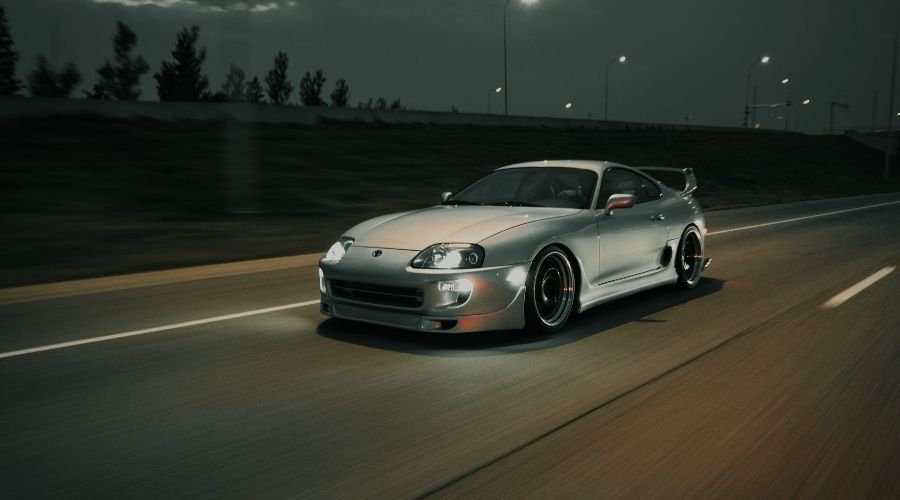
1. Toyota Supra (JZA80 / Mk4)
- The Engine: 3.0L Twin-Turbo 2JZ-GTE Inline-6
- Why It’s Iconic: Famous for its over-engineered iron block that comfortably handles double its factory horsepower on stock internals. Manual, factory twin-turbo JZA80 Supras remain premier blue-chip assets.
2. Nissan Skyline GT-R (R33 & R34)
- The Engine: 2.6L Twin-Turbo RB26DETT Inline-6 + ATTESA E-TS AWD
- Why It’s Iconic: Nicknamed “Godzilla,” the GT-R dominated Australian touring car racing in the early 90s. The R33 offers incredible performance value, while the late-90s R34 GT-R stands as a high-end collector masterpiece.
Godzilla’s Evolution: The Nissan Skyline GT-R R34 remains one of the most sought-after modern classics on earth.. Source: Wirestock / Getty Images
3. Mazda RX-7 (FD3S)
- The Engine: 1.3L 13B-REW Sequential Twin-Turbo Rotary
- Why It’s Iconic: Widely regarded as one of the most beautiful automotive designs ever penned. Lightweight, perfectly balanced (50:50 weight distribution) and capable of high-rpm rotary power delivery.
4. Honda NSX (NA1)
- The Engine: 3.0L Naturally Aspirated VTEC V6
- Why It’s Iconic: Developed with input from Formula 1 legend Ayrton Senna, the all-aluminum NSX proved an exotic supercar could offer everyday Japanese reliability and mid-engine balance.
5. Subaru Impreza WRX & STI (GC8)
- The Engine: 2.0L Turbocharged EJ20 Boxer Flat-4 + Symmetrical AWD
- Why It’s Iconic: The car that brought World Rally Championship pedigree to everyday driveways. The early lightweight GC8 chassis delivers raw, unfiltered boxer rumble and instant rally-bred acceleration.
1970s Traditional Classic vs. 1990s JDM Icon
| Feature / Dynamic | 1970s Aussie V8 Muscle | 1990s JDM Performance |
| Drivetrain Tech | Carburettors, 3-speed autos, leaf springs | Electronic fuel injection, twin-turbos, 6-speed manuals |
| Usability | Weekend-only cruiser; high fuel consumption | Daily-driven capability with air conditioning & power steering |
| Buyer Audience | Predominantly local Australian market | Global international collector base |
| Driving Feel | Heavy, straight-line torque | Agile cornering, boosted acceleration, high rev limits |
The Risks: What to Watch When Buying
While 1990s cars offer modern reliability, buying one requires diligence:
- The “Modification” Trap: Finding an unmolested, factory-spec car is difficult. Poorly executed aftermarket modifications or cheap tunes significantly diminish a car’s long-term value.
- Specialized Maintenance: Complex twin-turbo vacuum lines, early AWD differentials and rotary apex seals require mechanics who truly understand 90s Japanese platforms.
- OEM Parts Sourcing: While Nissan (NISMO Heritage), Toyota (GR Heritage Parts) and Mazda have launched factory reproduction programs for classic parts, some interior plastics and trim pieces remain hard to find.
The Verdict
The rise of 1990s performance cars isn’t a passing fad it is a permanent shift in collector car culture. These vehicles represent the peak of mechanical driver involvement before drive-by-wire throttles, heavy hybrid batteries and automatic driving modes took over. For enthusiasts who want a classic that can be driven hard on track days and parked proudly at local meets, 1990s icons remain the ultimate sweet spot.