




For generations of Australian motoring traditionalists, crossing the vast, arid expanse of the Nullarbor or tracking up the spine of the red center has required a highly specific mechanical arsenal: a diesel 4WD, twin jerry cans and a heavy-duty bull bar. The consensus among old-school road trippers was absolute: attempting a remote highway crossing on battery power alone was an exercise in pure madness.
To separate online speculation from hard tarmac reality, we embarked on a long-distance highway traversal to map exactly how Australia’s public charging infrastructure handles the ultimate outback stress test.
The Nullarbor Frontier: Solved, But Scripted
The historic narrative that the 1,600-kilometre Eyre Highway is an EV graveyard is officially dead. Thanks to the rollout of the WA EV Network and South Australia’s RAA Charge sites, the transcontinental run across the Nullarbor is fully connected.
Our data logs showed that the largest remaining charging gap across the plain has shriveled to just 175 kilometres.
At the Caiguna Roadhouse, we encountered one of the most unique mechanical triumphs on the highway: a 50kW DC fast charger powered entirely by recycled waste oil from the roadhouse’s fish-and-chip fryers. It charges an EV to 80% capacity in under an hour for a flat fee, proving that off-grid innovation can successfully bypass localized grid constraints.
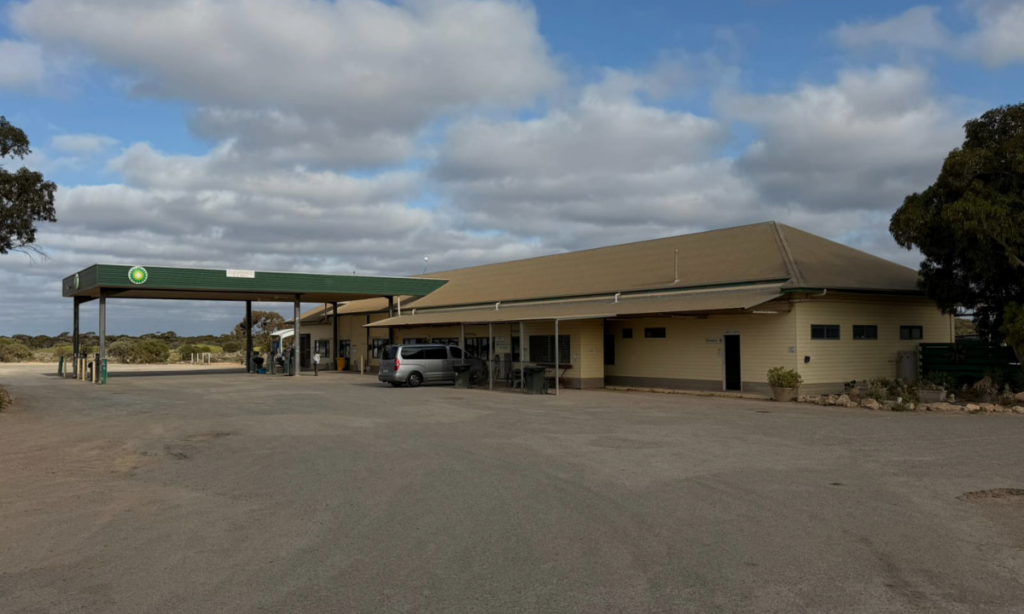
The True Outlier: The 625km Stuart Highway Dead Zone
However, heading north toward the Stuart Highway exposes the raw, unfinished frontier of the national charging network. While high-power public charging locations across the country have matured, the Northern Territory remains a challenging bottleneck.
The longest and most punishing infrastructure deficit in Australia lies between Katherine and Tennant Creek, spanning a brutal 625-kilometre stretch with zero public DC fast chargers. Conquering this sector requires checking into caravan parks, utilizing low-amperage overnight AC points and adopting precise power-conservation strategies.
Factual Outback EV Survival Guide
| Real-World Touring Metric | Practical Factual Data & Speed Strategies |
| Aerodynamic Drag Penalty | Cruising at 100km/h instead of the 110km/h limit recovers up to 15% range. |
| The Logbook Rule | Use PlugShare to “check in” 30 minutes before arrival to prevent queue gridlock. |
| Emergency Contingency | Always pack a three-phase portable charging lead to tap roadhouse laundry circuits. |
| The Golden Law | Always Be Charging (ABC). Never skip a working plug based on price or estimated range. |
The Verdict
Long-distance electric travel across regional Australia is entirely achievable, but it demands an analytical mindset. While the east coast and the Nullarbor are structurally secured, tracking into the deeper interior requires ditching the romanticism of spontaneous driving for meticulous energy mapping. The outback doesn’t care about your battery capacity it only rewards meticulous preparation.
For a real-world look at the exact logbook dynamics and backup charging solutions needed when outback infrastructure goes dark, check out this 4,200km Electric Drive Across Australia. This video is highly relevant because it follows an enthusiast’s first-hand journey crossing the Nullarbor, highlighting how to manage unexpected charger maintenance downs and the true cost comparison against a fossil-fuel vehicle.