


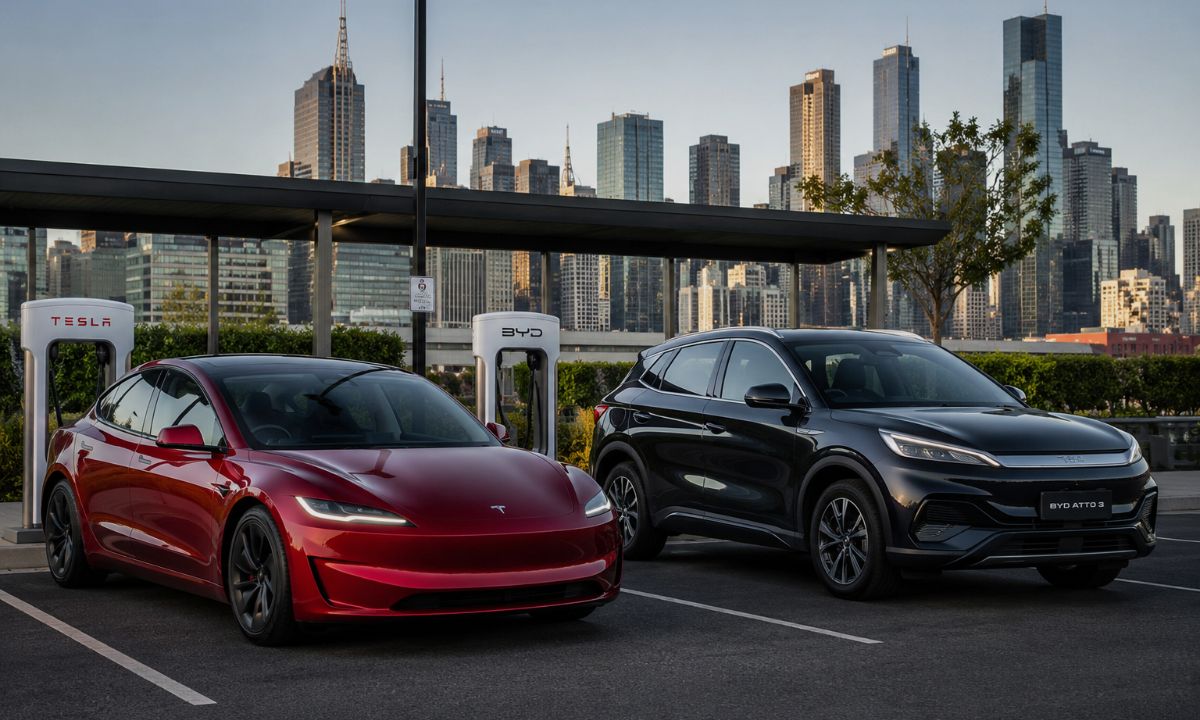

Tesla’s dominance in Australia’s premium EV segment faced unprecedented challenge in 2026 as Chinese manufacturers launched sophisticated electric vehicles offering comparable technology at substantially lower pricing. This collision between Tesla’s brand prestige and Chinese manufacturers’ engineering capability and cost efficiency created genuine purchasing dilemma for Australian EV buyers should loyalty default toward Tesla’s established track record and supercharger network, or embrace ambitious Chinese alternatives offering seemingly superior value propositions?
Market Context: Why Chinese EVs Matter
Chinese EV manufacturers commanded approximately 60% of global EV sales in 2025-2026. BYD, NIO, Li Auto, XPeng and others deployed extraordinary capital into engineering, manufacturing and international expansion. Their products arrived in Australian markets with mature technology, competitive performance and aggressive pricing fundamentally disrupting traditional automotive hierarchies.
Tesla’s historical Australian dominance (approximately 50% of premium EV market) contracted noticeably as Chinese alternatives gained foothold. Understanding this market shift determines whether premium EV buyers default to familiar Tesla or explore aggressive Chinese alternatives.
The Tesla Model 3 Standard Position
Tesla’s Model 3 remains compelling baseline. The long-range variant (approximately 602 kilometres WLTP range) starts at approximately AUD $54,000–$58,000, depending on specification and current pricing adjustments. The performance variant approaches AUD $65,000–$70,000.
Model 3 strengths include legendary supercharger network (approximately 500+ stations nationally), proven reliability reputation (8+ years operational history in Australia), established warranty support and software sophistication. Acceleration (5.1 seconds 0–100 km/h long-range variant) remains competitive. Charging times on Tesla superchargers (approximately 25 minutes for 80%) exceed most competitors.
Weaknesses: interior perceived as sparse compared to Chinese competitors, range anxiety persists despite improving infrastructure and initial purchase prices undercut competitors less dramatically than marketing suggests.
BYD Yuan Plus EV: The Aggressive Chinese Challenger
BYD’s Yuan Plus (marketed Atto 3 internationally) arrived in Australia with AUD $43,000–$50,000 pricing approximately AUD $8,000–$12,000 undercutting Tesla Model 3. The longer-range variant delivers 480+ kilometres WLTP range, acceptable braking performance and respectable acceleration (approximately 7.8 seconds 0–100 km/h).
Atto 3 advantages: competitive pricing, spacious interior (larger than Model 3), established Chinese brand reputation and growing network support in Australia. Disadvantages: limited supercharger access (restricted to third-party networks), warranty questions (BYD’s Australian presence remains recent) and software localisation requiring improvement for Australian users accustomed to English-language interfaces.
Li Auto and XPeng: The Premium Alternatives
Li Auto’s EX90 (anticipated Australian launch) positions itself as premium alternative, targeting approximately AUD $58,000–$68,000 positioning it directly against Model 3 performance variant. EX90 promises 650+ kilometres range, three-screen interior experience and autonomous driving capability exceeding current Tesla implementation.
XPeng’s G9 (anticipated Australian availability) similarly targets premium segment with approximately AUD $55,000–$65,000 pricing and innovative features (lidar-based autonomous features, integrated smart home controls) positioning it as technology leader alongside Tesla.
Cost-of-Ownership Comparison
Tesla Model 3 Purchase Price (Long-Range): AUD $54,000–$58,000
BYD Atto 3 Purchase Price: AUD $43,000–$48,000
Li Auto EX90 Purchase Price: AUD $58,000–$65,000
Tesla Supercharging Cost (1000 km): AUD $70–$90
BYD Third-Party Charging (1000 km): AUD $100–$130
Li Auto Charging Cost (1000 km): AUD $80–$110
Tesla Insurance (Annual): AUD $1,200–$1,600
BYD Insurance (Annual): AUD $1,000–$1,400
Li Auto Insurance (Annual): AUD $1,300–$1,800
Tesla Servicing (Annual): AUD $200–$400
BYD Servicing (Annual): AUD $300–$500
Li Auto Servicing (Annual): AUD $250–$450
5-Year Ownership Cost:
Tesla Model 3: AUD $65,000–$73,000
BYD Atto 3: AUD $52,000–$59,000
Li Auto EX90: AUD $68,000–$78,000
Technology and Features: The Evolving Picture
Tesla’s software advantages eroded notably. Current Chinese EV software delivers comparable user experience, superior interior screen integration and increasingly sophisticated autonomous features. Li Auto’s autonomous capabilities (LiDAR-based, mapping integration) arguably exceed Tesla’s vision-only approach.
Battery technology favour increasingly shifts toward Chinese manufacturers. CATL, BYD’s own battery division, produces batteries matching or exceeding Tesla’s specifications at lower cost. This manufacturing advantage translates directly to competitive pricing.
Warranty and Support Considerations
Tesla Australia offers approximately 8-year/160,000-km battery warranty industry standard. BYD offers similar warranty coverage, though Australian service network remains less developed. Li Auto and XPeng warranty terms evolve as Australian operations mature.
Service accessibility varies dramatically. Tesla maintains established networks throughout Australia. Chinese manufacturers increasingly establish Australian service partnerships, though coverage remains concentrated in major cities.
Supercharger Network: Tesla’s Enduring Advantage
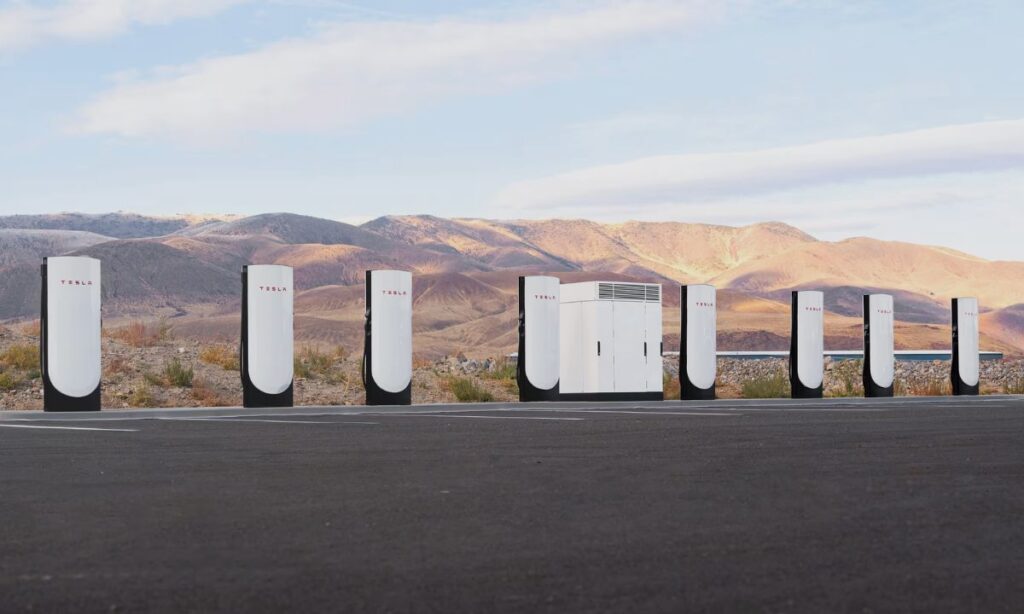
Tesla supercharger network remains strategic advantage. Approximately 500+ superchargers nationally ensure road-trip feasibility without planning. Chinese EV manufacturers depend on third-party networks (NRMA, BP Pulse, OK Charge), occasionally resulting in lower charger density on specific routes.
This infrastructure advantage justifies premium pricing value of convenient network shouldn’t be underestimated for frequent road-trippers.
The Warranty Question: Chinese Reliability Concerns
Legitimate questions persist regarding Chinese EV reliability beyond 5-year ownership windows. Long-term data remains limited. Tesla’s 8+ years Australian operational history provides confidence in durability. Chinese manufacturers’ 3-4 years Australian presence offers limited historical perspective.
This uncertainty justifies potential premium some buyers reasonably accept higher pricing for proven reliability.
Market Positioning: The Value Proposition Shift
Chinese EVs capture value-conscious buyers. Tesla retains premium positioning for buyers prioritising supercharger networks, established reliability and autonomous features.
Increasingly, the decision reflects personal priorities: if supercharger access and proven reliability matter most, Tesla remains defensible. If purchase price, interior space and Chinese technological sophistication appeal more, Chinese alternatives offer compelling value.
The Verdict
Australia’s EV market entered transitional phase where Tesla’s dominance faces genuine challenge from sophisticated Chinese manufacturers. Tesla Model 3 remains excellent vehicle justifying its positioning through network advantage, proven reliability and technology sophistication. Yet Chinese alternatives no longer represent compromises or budget alternatives they represent legitimate competitive choices delivering comparable or superior value depending on individual priorities.
For Australian EV buyers in 2026, the decision transcends simplistic Tesla-versus-others dichotomy. Instead, it reflects careful evaluation of priorities: supercharger convenience, purchase price, interior preferences, autonomous features and warranty confidence. All are valid criteria pointing toward different conclusions.
The competitive landscape matured. Choose thoughtfully rather than defaulting to brand reputation alone.