


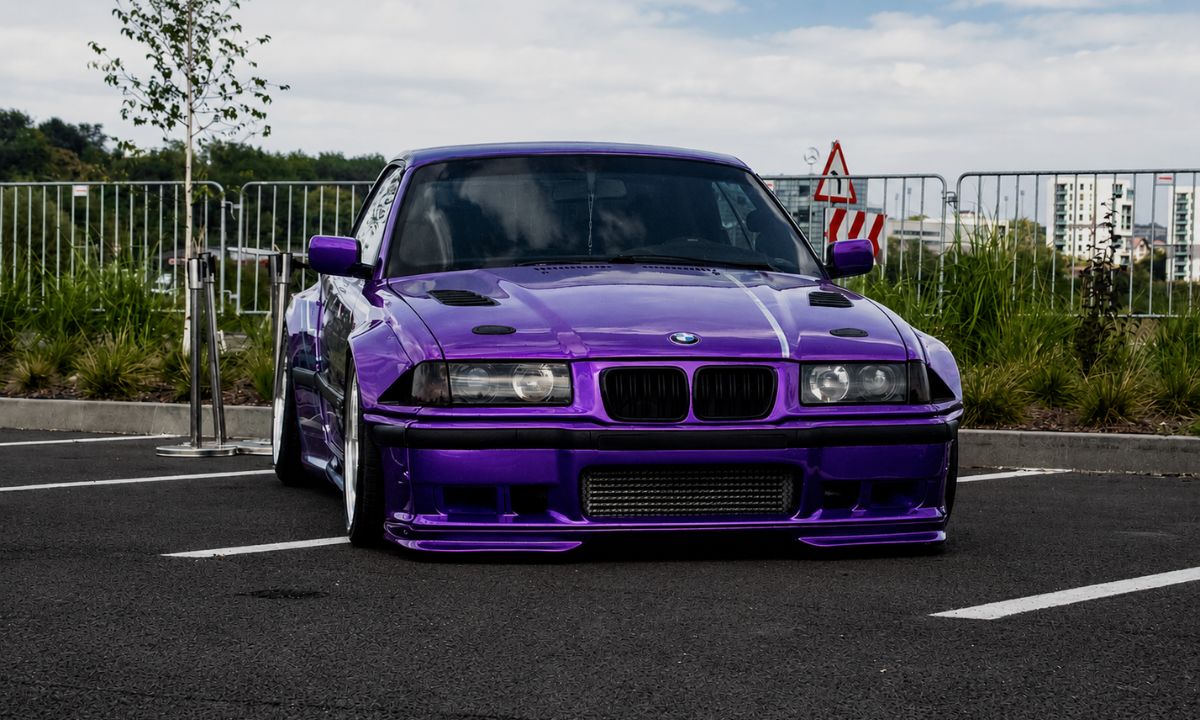

The BMW E36 (1992-1998, with later M3 variants extending to 2000) refuses to fade into irrelevance. Nearly 30 years after production commenced, E36 remains among Australia’s most popular project car platforms not because newer alternatives don’t exist, but because E36 delivers uncommon combination of affordable purchase price, genuine performance potential and modification accessibility that newer platforms cannot match.
For Australian enthusiasts pursuing project car builds with limited budgets, the E36 represents gateway machine: legitimately collectible yet affordable enough for experimentation, modern enough to feel contemporary yet simple enough for DIY maintenance and modification.
Why E36 Endures: Market Economics and Community
The BMW E36 three-series generation sold approximately 2.2 million units worldwide. This production volume means used examples remain plentiful and affordable. A serviceable 1995 BMW 323i with moderate mileage costs approximately AUD $5,000-$8,000 in Australian market. This accessibility democratises E36 modification project building doesn’t require six-figure inheritance.
Simultaneously, E36 community remains robust. Enthusiast forums, specialist mechanics and aftermarket suppliers continue supporting E36 projects despite vehicle age. This community persistence ensures that modification ambitions find experienced guidance and available parts.
Compare this to rarer platforms where specialist knowledge becomes scarce and parts availability evolves toward extinction. E36 avoids this trap through sheer population density.
Market Positioning: The Value Proposition
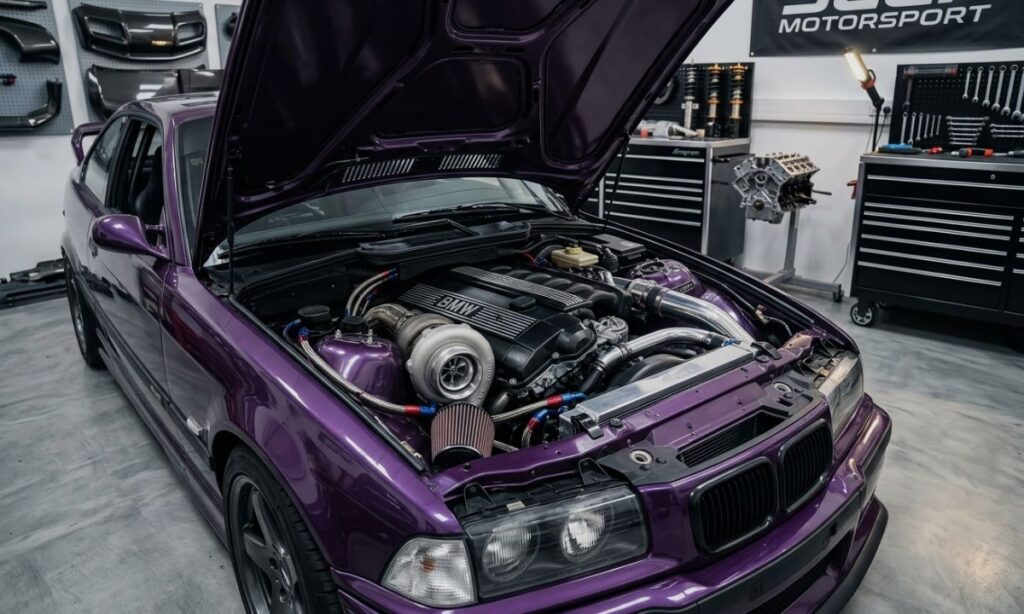
E36 2.8-litre six-cylinder engines produce approximately 145 kilowatts stock adequate performance by 1990s standards, decidedly modest by 2026 perspective. Yet this moderate baseline creates opportunity. Turbocharging yields realistic 200+ kilowatt potential, naturally aspirated modifications approach 165-180 kilowatts and complete engine swaps (M50 six-cylinder, S52 US-spec six-cylinder, or even four-cylinder turbos) offer tangible alternatives.
This flexibility means E36 builders pursue diverse paths some preferring naturally aspirated reliability, others embracing turbo aggression, some attempting engine transplants. No single “correct” approach exists; E36 platform accommodates multiple philosophies.
Modification Pathways: Scalable Approach
Entry-Level Modification (AUD $6,000-$10,000):
• Coilover suspension (AUD $1,500-$2,500)
• Performance brakes (AUD $1,200-$1,800)
• Lightweight wheels and tyres (AUD $1,500-$2,200)
• Engine air intake system (AUD $400-$600)
• ECU chip tuning (AUD $500-$800)
• Interior weight reduction (AUD $800-$1,200)
Result: Noticeably improved handling, modest power increase (8-12%), genuine street performance credibility.
Intermediate Performance Build (AUD $18,000-$28,000):
• Lightweight suspension overhaul (Öhlins, Stance, Koni: AUD $4,000-$6,000)
• Upgraded differential with LSD (AUD $1,200-$2,000)
• Upgraded braking system (four-piston calipers: AUD $2,500-$3,500)
• Supercharger system (positive displacement, lower temperature: AUD $5,000-$7,000)
• Engine management ECU (AUD $1,500-$2,500)
• Cosmetic and performance weight reduction (AUD $2,000-$3,000)
Result: 180-200+ kilowatt engine, substantially improved handling, genuine performance car.
Competition-Grade Build (AUD $40,000-$60,000+):
• Engine rebuild with compression increase (AUD $4,000-$6,000)
• Turbocharger system with intercooling (AUD $6,000-$9,000)
• Standalone engine management system (AUD $2,500-$4,000)
• Full suspension overhaul with track-specific geometry (AUD $6,000-$9,000)
• Complete interior removal and roll cage (AUD $3,000-$5,000)
• Aerodynamic package (splitters, diffusers, wings: AUD $3,000-$5,000)
• Transmission upgrade/LSD/performance differential (AUD $2,000-$4,000)
Result: 220-270+ kilowatt engines, genuinely competitive track capability.
Mechanical Foundation: The Honest Assessment
E36 engineering remains fundamentally sound despite age. The M50/M52 six-cylinder engine proves robust when properly maintained. The ZF transmission (automatic) and Getrag five-speed manual transmissions accept modest power increases without modification; higher power demands transmission upgrades (sequential options, reinforced internals).
Chassis fundamentals remain competitive. MacPherson strut suspension geometry, while outdated by contemporary standards, responds well to coilover conversion and geometry adjustment. Braking system scales adequately for modest performance increases, though serious builds demand upgraded hardware.
Critically, E36 absence of modern complexity (no drive-by-wire throttle, minimal electronic nanny systems, straightforward engine management) facilitates DIY maintenance and modification. This accessibility proves invaluable for budget-conscious builders.
Real Project Economics: Complete Build Example
Consider a practical E36 project trajectory: purchase 1996 BMW 323i for AUD $6,500, invest AUD $20,000 in coilovers, LSD, braking, supercharger and engine management, resulting in 200+ kilowatt street performance machine. Total investment: AUD $26,500 for vehicle delivering legitimate performance and modification credibility that most AUD $30,000+ new cars cannot approach.
Registration under modified vehicle regulations (as discussed in adjacent modification guide) requires engineer’s report and dyno testing (approximately AUD $2,000-$3,000), but completed vehicle emerges legally compliant and insurable.
Depreciation proves minimal well-maintained, properly documented E36 project cars appreciate or hold value remarkably well, particularly if builds emphasise reliability and documentation.
Community and Knowledge Base Advantage
E36 online resources (BimmerForums, E36Zone, local Australian forums) provide thousands of documented projects, modification guides and troubleshooting threads. A problem requiring engineering creativity on rare platforms receives immediate practical solution on E36 due to collective community experience spanning decades.
Professional specialists (independent mechanics, specialist shops) understand E36 intimately. This expertise translates to reasonable repair costs and reliable guidance during project development.
Practical Running Costs
E36 maintenance costs remain reasonable. Oil changes, filter replacements, brake service, suspension maintenance all straightforward and inexpensive. Parts availability remains excellent for maintenance items; performance components require specialist sourcing but remain available.
Fuel consumption averages 7-8 litres per 100 kilometres naturally aspirated, 9-10 litres turbocharged reasonable for performance vehicles. Insurance for modified E36s costs approximately AUD $2,500-$4,000 annually through specialist providers.
The Verdict
The BMW E36 endures as project car platform not through technological prowess or contemporary performance metrics, but through elegant combination of affordable acquisition, proven mechanical foundation and robust community support. It’s a car that improves substantially through thoughtful modification without demanding exotic expertise or prohibitive budgets.
For Australian project builders pursuing performance credentials within realistic financial constraints, E36 remains genuinely competitive choice not the newest, not the flashiest, but undeniably one of the smartest entry points into serious project car building.