


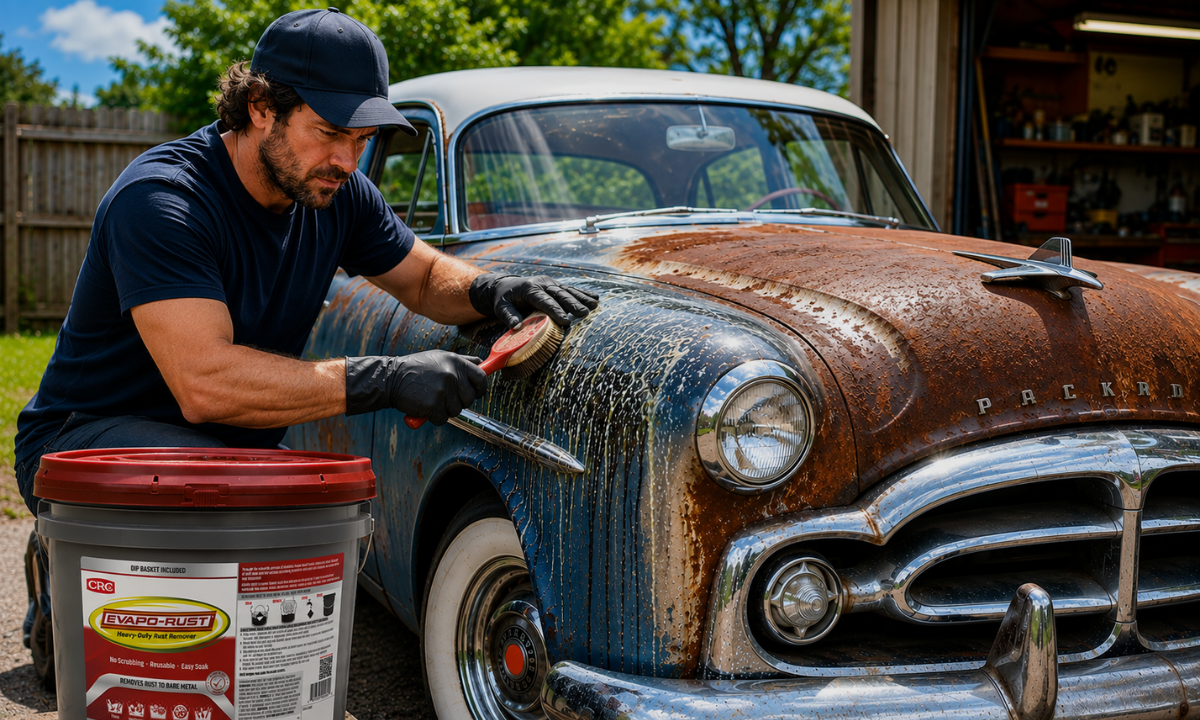

For generations of Australian DIY restorers, the first step of any classic rebuild or barn-find rescue was a brutal, filthy rite of passage. You grabbed an angle grinder equipped with a knotted wire wheel, pulled on your respirator and spent hours in a cloud of toxic orange dust, orange sparks and flying wire bristles trying to reclaim pitted steel components.
But a massive shift in chemical engineering has quietly made this violent, abrasive approach entirely obsolete.
By utilizing pH-neutral selective chelation baths, backyard builders are now stripping heavily oxidized project parts down to surgical-grade bare steel overnight. Best of all, they are doing it in total silence, with zero dust and without a single grinding disc ever touching the base metal.
The Chemistry: How “Smart” Molecules Target the Orange
To understand why this process is so revolutionary, you have to look at the difference between brute-force acid stripping and molecular chelation.
Traditional rust-stripping acids like hydrochloric or phosphoric are highly aggressive and non-selective. They dissolve the rust, but once that is gone, they immediately start eating into the healthy, clean steel beneath, altering the part’s critical dimensional tolerances.
Traditional Acid Strip: [Acid Attack] ➔ Eats Rust ➔ Keeps Eating Clean Steel (Etching)
Selective Chelation: [Chelator Cup] ➔ Grabs Oxide Only ➔ Releases Iron ➔ Ignores Clean Steel
Selective chelation agents (such as Evapo-Rust) operate on a completely neutral pH level of approximately 6.1 to 7.0. The active ingredient is a large, synthetic organic molecule designed with a highly specific geometric “claw”.
This claw is chemically calibrated to seek out and bind strictly with the weaker iron-to-oxygen bonds found in iron oxide (rust). It lifts the iron ion out of the rust matrix and holds it in a water-soluble liquid suspension.
Because the molecular bond holding healthy steel together is vastly stronger, the chelating molecules are physically incapable of stripping or etching the undamaged base metal beneath.
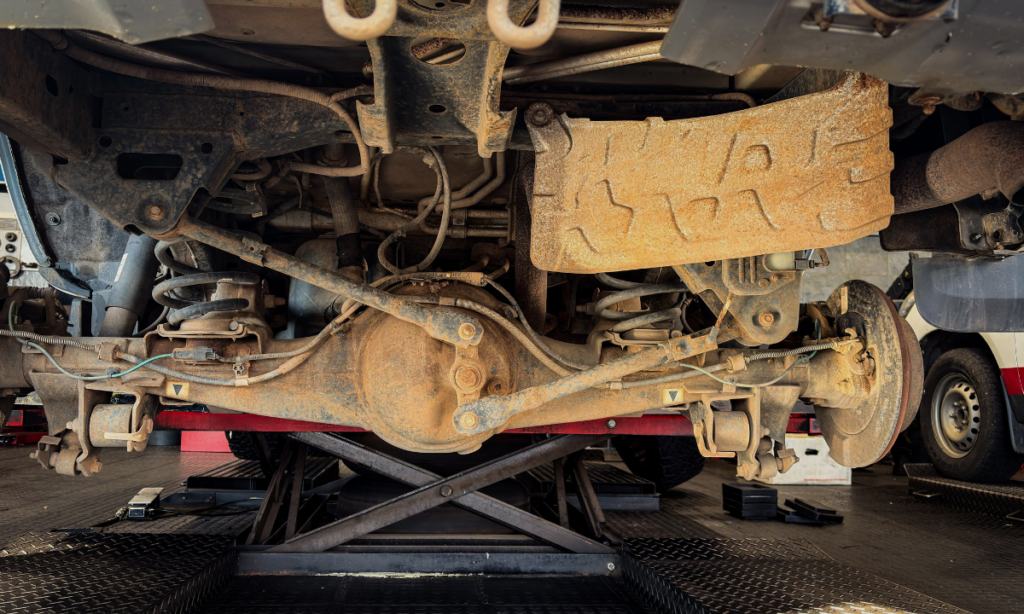
The Overnight Experiment: How to Set Up a Chelation Bath
Getting pristine, bare-metal results at home requires almost zero physical effort. Follow this simple, fact-based workflow to clean your heavily rusted brackets, suspension arms, or classic fasteners:
- The Degrease Prep: While chelating baths contain light detergents, they cannot penetrate heavy grease or barrier oils. Give your rusted parts a quick scrub with a heavy-duty degreaser and rinse with hot water first.
- Submerge and Soak: Place your parts in a heavy-duty plastic tub and pour in the undiluted chelating liquid until the metal is completely submerged.
- Manage the Temperature: The chelation chemical reaction is highly temperature-dependent. Ensure your bath sits in an area above 18°C; cold garage floors in winter will drastically slow the molecular process.
- The Wipe and Rinse: After 12 to 24 hours of soaking, pull the parts out. You will notice a dark carbon film on high-carbon steels; simply wipe this away with a clean microfiber cloth and rinse the part thoroughly in fresh water.
The Verdict
Selective chemical chelation baths represent the ultimate “set-and-forget” tool for the modern garage. The liquid is completely non-toxic, non-corrosive, skin-safe and can be reused multiple times until the solution eventually turns pitch black.
By letting chemistry do the heavy lifting while you sleep, you preserve the exact factory tolerances of your rare vintage parts, protect your lungs from abrasive dust and save your ears from the endless scream of the angle grinder.