


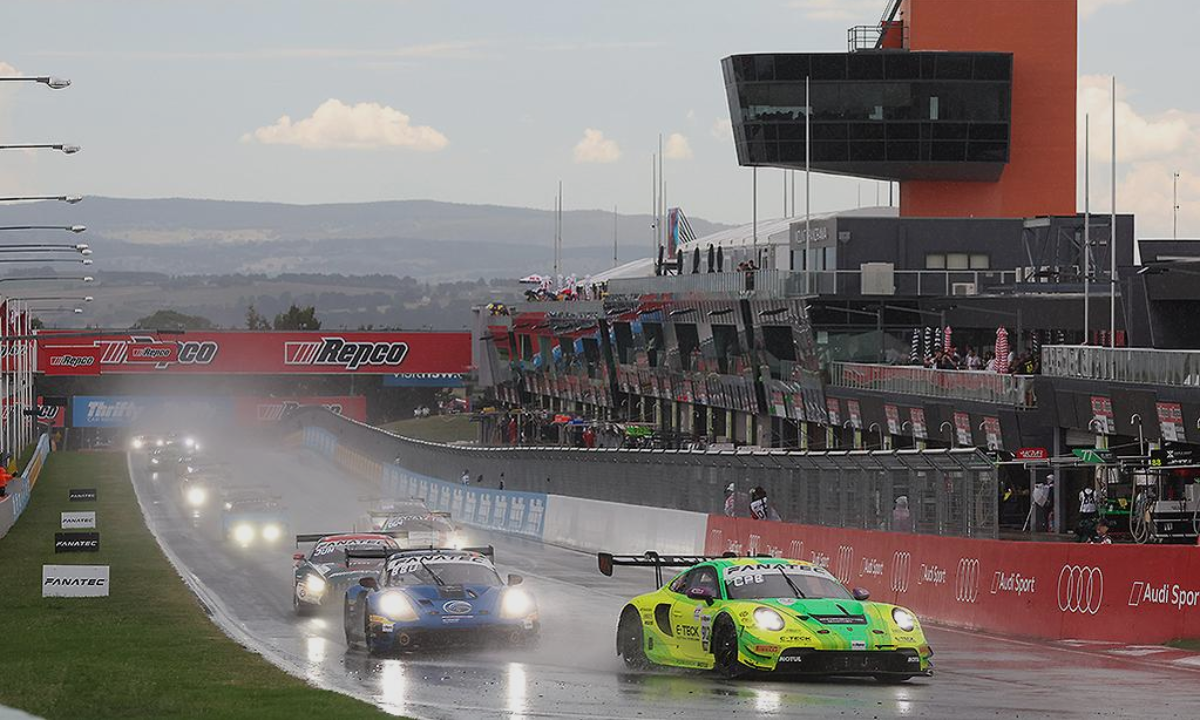

When the green flag drops in the pre-dawn darkness of the Bathurst 12 Hour, Mount Panorama looks like a serene, picturesque playground. But for GT3 racing teams, the mountain is a brutal, cold-blooded machine designed to tear metal apart.
While a GT3 race car shares its basic silhouette with high-end road-going supercars, the intense thermal and physical load of conquering 12 continuous hours on this circuit requires specialized, heavy-duty motorsport engineering.
From the tight concrete walls of the Skyline descent to the high-speed braking zones of Conrod Straight, the mountain is a relentless torture chamber that would melt a commercial high-performance brake package in mere minutes.
The Thermal Squeeze: Riding the Fire
The fundamental challenge of Bathurst is its sheer physical topography. Unlike a flat GP circuit with predictable straightaways and gentle curves, Mount Panorama forces a car to climb and descend 174 vertical metres on every single lap.
When a GT3 beast barrels down Conrod Straight, reaching speeds of 290 km/h, it must drop to 110 km/h in just a few seconds to make the turn into The Chase.
This extreme deceleration converts kinetic energy into thermal energy at a violent rate. The temperature of the heavy carbon-metallic brake rotors spikes to a staggering 850°C to 900°C almost instantly.
At these temperatures, standard brake fluid boils, rubber seals crumble and basic metallic brake pads glaze over, completely losing their stopping power.
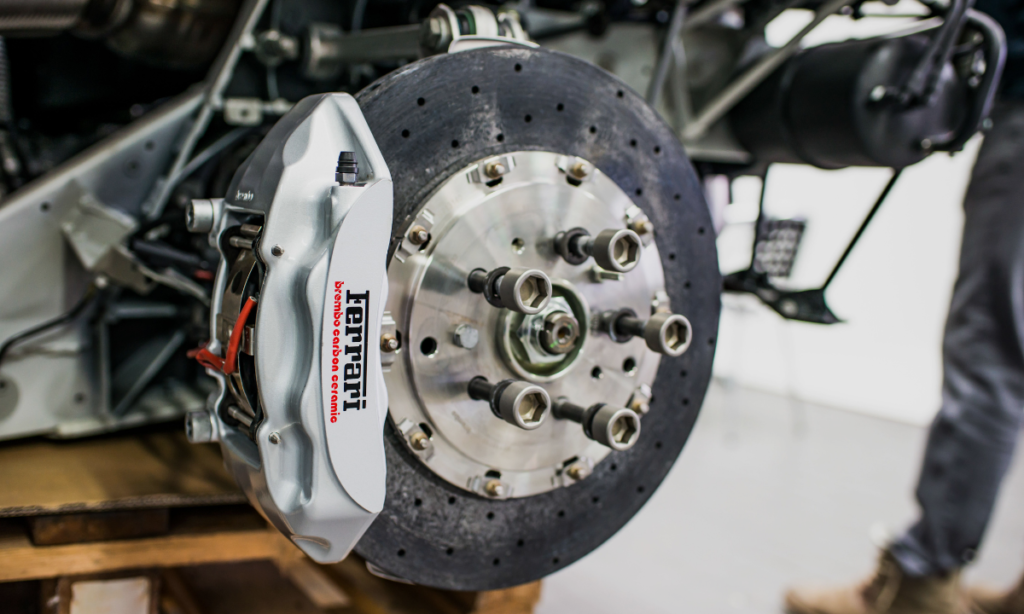
Managing the Heat: The Secret Science of Air Ducting
Because the rules forbid exotic carbon-carbon brakes (forcing teams to run steel rotors), engineers must rely on advanced aerodynamics to prevent total thermal failure.
To keep the brake fluid from boiling, teams employ custom-molded carbon ducts that route high-velocity air from the front bumper directly into the center of the wheel hub.
- Vented Brake Rotors: The steel rotors feature highly complex, curved internal cooling vanes that act as a centrifugal pump, throwing hot air outward away from the car.
- Active Silicon Seals: High-temperature silicone piston seals inside the racing calipers are engineered to withstand continuous operating temperatures of 300°C without losing pressure.
The Wear and Tear: Surviving 12 Hours on One Set of Pads
During a grueling 12-hour stint, a team will complete approximately 260 to 270 laps of the mountain.
To survive over 3,000 heavy braking cycles without stopping for a time-consuming pad change in the pits, teams run thick, high-density endurance racing pads. These pads utilize a unique sintered-metal matrix designed to build a transfer layer on the steel rotor, reducing outright wear while maintaining a consistent friction coefficient.
The Verdict
The Bathurst 12 Hour isn’t won by horsepower alone. It is won by the team that can manage their thermal energy the most efficiently. If you want to see what this mechanical abuse looks like in real life, watch the glowing red rotors illuminating the dark in the early morning coverage. It is a stunning visual reminder of the incredible engineering required to keep these GT3 weapons on the track.