


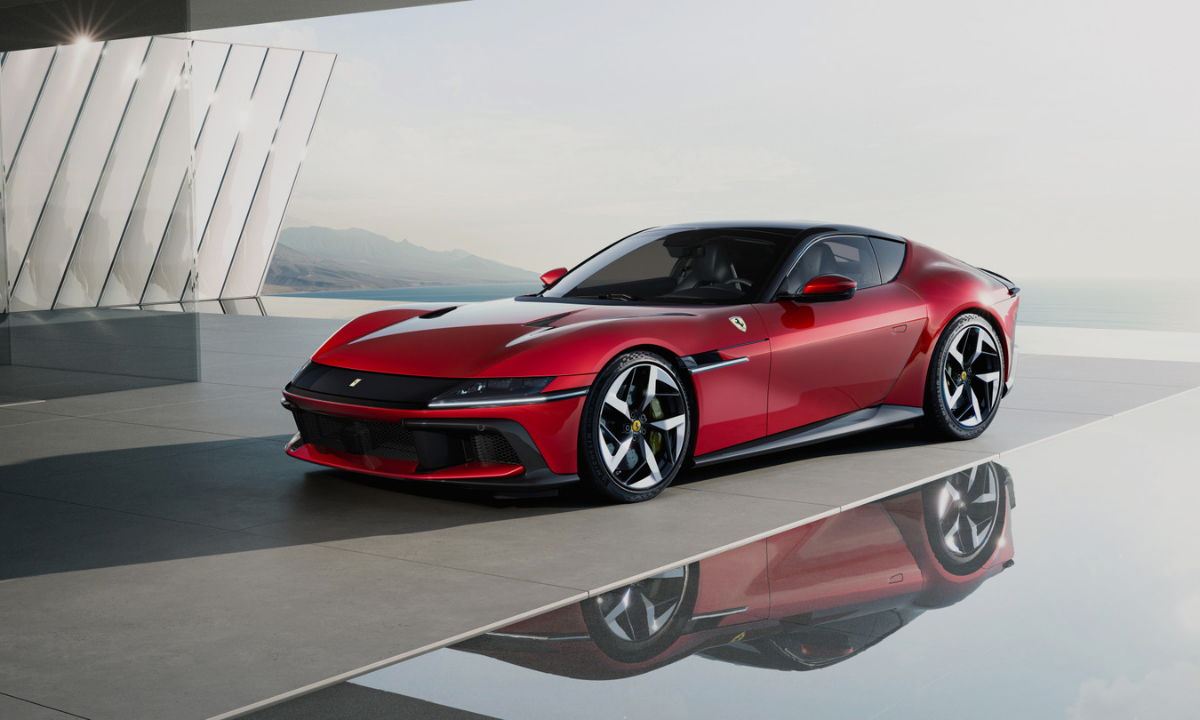

For the modern automotive purist, the relentless march towards forced induction and heavy hybrid powertrains feels like a slow dilution of sensory drama. While turbochargers provide immense low-end torque and electric motors mask transient lag, they permanently alter the acoustic theater and mechanical crescendo of a high-RPM performance machine.
Yet, in an era dominated by strict international compliance frameworks, a defiant mechanical masterpiece has managed to escape hybridization and turbocharging completely. The Ferrari 12Cilindri stands as a magnificent baseline, proving that world-class engineering teams can keep the iconic, naturally aspirated V12 screaming all the way to a stratospheric 9,500 RPM redline while remaining fully legal.
The Compliance Blueprint: Mastering Euro 6e
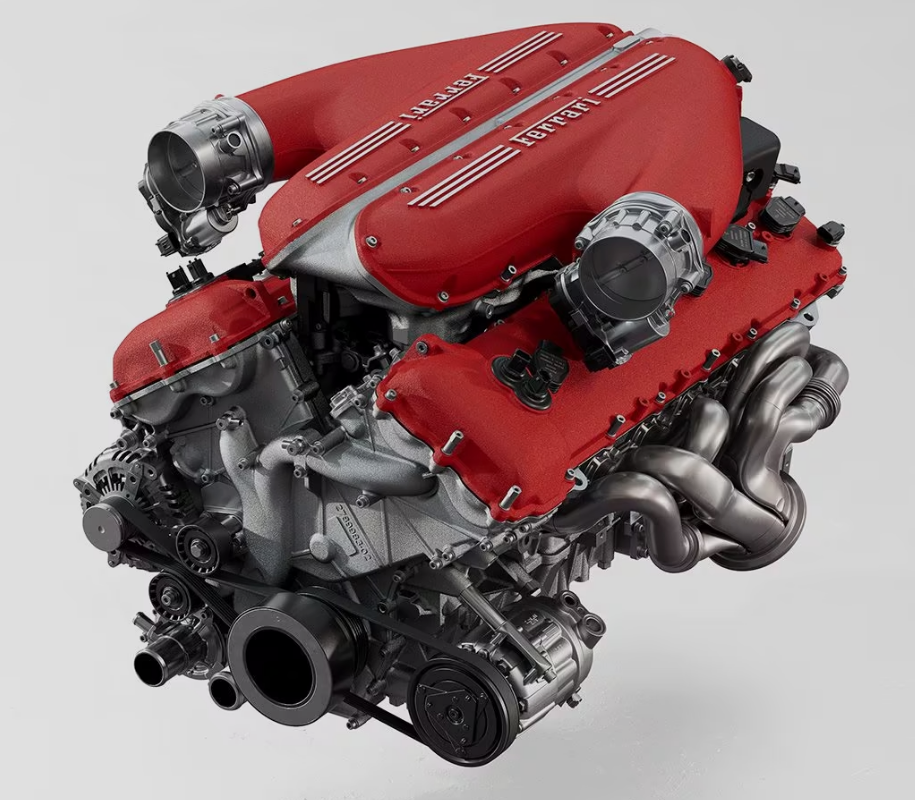
Keeping a massive 6.5-litre multi-cylinder combustion engine alive in 2026 without adding heavy electric battery packs requires an absolute war against friction and thermal waste. To satisfy brutal Euro 6e and China 6b emissions standards, Maranello’s engineers heavily modified the legendary F140HD engine block.
Instead of suffocating the engine’s distinct vocal tract, engineers completely overhauled the valvetrain and exhaust scrubbing mechanics:
- F1-Derived Sliding Finger Followers: Steel bucket lifters were discarded for DLC (diamond-like carbon) coated sliding finger followers. This reduces valvetrain mass and drastically lowers friction coefficients at high revs.
- Lightweight Internals: The engine utilizes titanium connecting rods and lightweight aluminum alloy pistons, saving critical rotating mass to ensure instantaneous throttle response.
- Ceramic Scavenging Matrix: The new exhaust layout features an advanced system where ceramic catalytic converters are mated directly to high-density gas particulate filters (GPF). This configuration traps harmful particulates without completely strangling the equal-length 6-in-1 manifolds that produce Ferrari’s signature howling exhaust note.
Balancing the Torque Sacrifices
Meeting Euro 6e parameters did demand a slight, deliberate compromise. Peak torque was trimmed to 678Nm at 7,250 RPM a minor drop compared to legacy hardcore variants like the 812 Competizione to optimize mid-range combustion efficiency.
To entirely mask this reduction for the driver, engineers paired the V12 with a lightning-fast 8-speed dual-clutch transmission. By shortening the lower gear ratios, the drivetrain actively transmits 12% more effective torque directly to the rear axle, propelling the supercar from 0–100 km/h in a blinding 2.9 seconds without a single turbocharger in sight.
The Verdict
The survival of the pure combustion V12 isn’t born from stubborn nostalgia, but rather elite mechanical mastery. By extracting massive volumetric efficiency through F1-grade valvetrain architecture and highly precise electronic engine mapping, top-flight builders are proving that the pure, unadulterated acoustic redline still has a legitimate place on modern asphalt.
To witness how these exact engineering calibrations sound and perform under real-world tracking loads, check out this comprehensive Ferrari 12Cilindri Emissions Solutions Review. This video provides an in-depth mechanical breakdown and first-drive review directly answering how Maranello managed to preserve its iconic V12 acoustic profile without resorting to forced induction or heavy hybridization.