


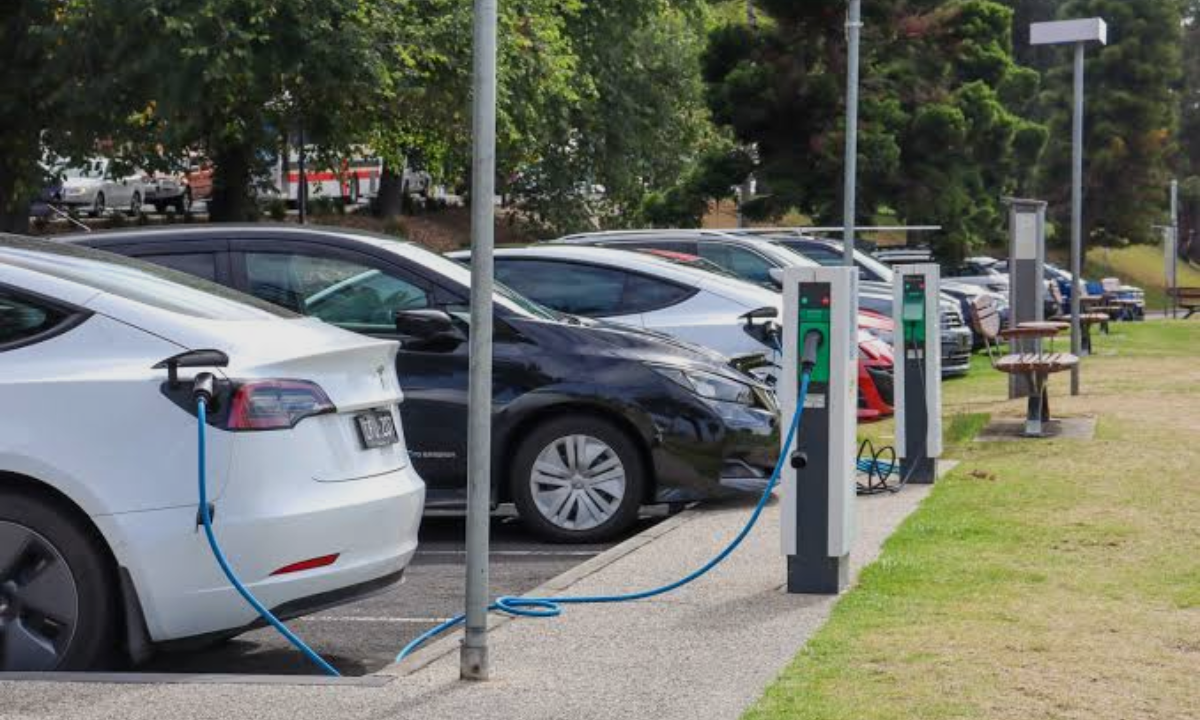

For years, the psychological hurdle preventing mainstream adoption of electric cars down under has been the refueling time discrepancy. Pulling up to a standard bowser and pumping 50 litres of fossil fuel takes roughly five minutes. Meanwhile, even on advanced 400-volt charging networks, adding an equivalent amount of highway range meant remaining tethered to a cord for 30 to 45 minutes.
But the introduction of 5C-rate lithium iron phosphate (LFP) battery packs paired with high-output 800-volt Silicon Carbide (SiC) electrical architecture has officially shattered this barrier. New arrivals on local asphalt can accept continuous DC charging inputs scaling past 450kW, replenishing an empty battery pack from 10 to 80 percent capacity in exactly 12 minutes.
Demystifying this speed requires analyzing a profound mechanical and chemical shift occurring within the cell matrix itself.
What Does “5C” Actually Mean?
In automotive engineering, a battery’s “C-rate” defines the relationship between the applied charging current and the pack’s overall capacity.
Historically, LFP chemistry was restricted to 1.5C or 2C rates because pushing more current caused lithium plating a chemical failure where ions form metallic spikes on the anode, permanently degrading cell life and creating short-circuit hazards.
To achieve a true 5C rating, battery pioneers like CATL completely overhauled the internal microstructure. Modern 5C cells use super-conductive electrolyte formulations that reduce resistance across the separator layer, combined with isotropic graphite anodes that feature multidimensional entry channels. This enables lithium ions to insert themselves into the anode matrix up to six times faster than legacy configurations without causing degradation.
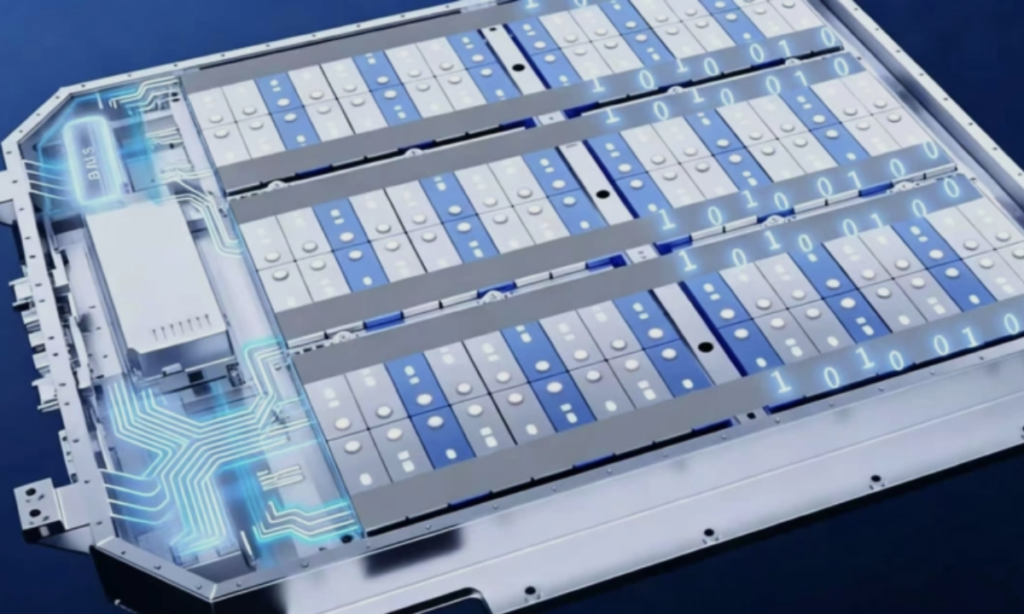
The Ultimate Thermal War: Vehicles Accepting 450kW
Pumping a massive 450kW of raw physical energy into a vehicle creates an intense thermal challenge. Under Joule’s Law, high electric current flowing through internal resistance generates extreme heat. If a vehicle’s internal climate spikes past 60°C to 65°C, the Battery Management System (BMS) will instantly choke the intake speed to prevent thermal runaway.
To manage this thermal wave, 5C-equipped chassis utilize advanced dual-sided liquid cooling plates directly sandwiching the cell modules. Instead of routing standard engine coolant, the vehicle’s HVAC compressor actively chills the battery fluid down below 15°C before it enters the floor pan. This continuous, high-volume thermal extraction keeps internal cell temperatures stabilized well within their safe performance zone.
Factual Charging Matrix: 400V Legacy vs. 2026 800V 5C
| Charging Variable | 400V Legacy Platform (e.g., Early EVs) | 800V SiC 5C Architecture (2026 Spec) |
| Peak DC Power Cap | 150 kW to 175 kW | 451 kW |
| 10% to 80% Time | 30 to 45 Minutes | 12 Minutes |
| Cooling Architecture | Single-sided passive plate | Active dual-sided liquid chiller |
| Amperage Load | 350 Amps to 400 Amps max | Up to 600 Amps continuous |
The Verdict
The realization of 450kW charging speeds proves that the transition to electric vehicles is shifting from a infrastructure numbers game to an outright battle of chemical engineering. By deploying robust 5C cell geometry and heavy-duty active thermal management systems, manufacturers are matching the traditional pit-stop timetable. The charging barrier hasn’t just been breached it has been entirely removed.