


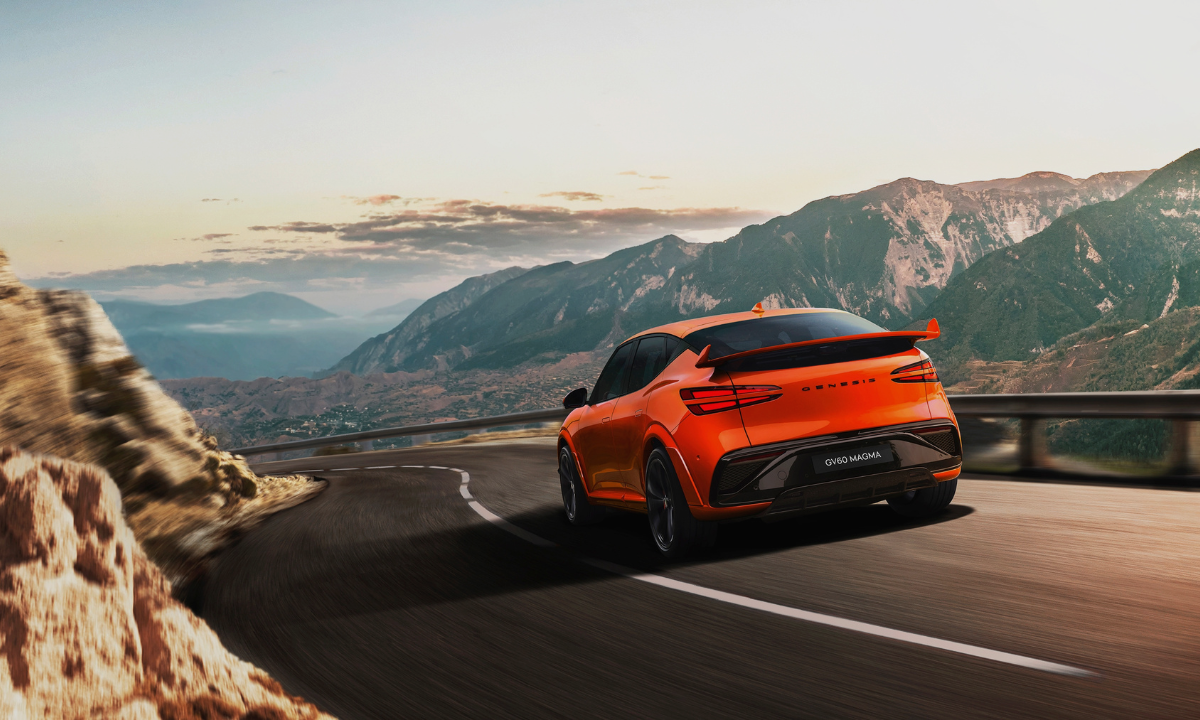

For years, the premium electric vehicle tier operated under a strict, predictable hierarchy. If you wanted razor-sharp cornering dynamics and brand prestige, you paid six figures for a Porsche Macan Electric. If you wanted raw, unhinged track-ready theatricality, you saved twenty grand and bought a Hyundai Ioniq 5 N.
Now, Genesis has officially crashed the party. Entering the market at $130,000 before on-road costs, the brand-new Genesis GV60 Magma marks the global launch of Hyundai’s luxury arm into the high-octane performance sub-brand space.
But on local regional tarmac, does this bright orange flagship justify supercar money, or is it merely an over-dressed, over-engineered marketing exercise?
The Raw Specs: Brute Power on Boost
There is no denying the mechanical muscle under the Magma’s widened guard panels. Sharing the brilliant E-GMP architecture with its Ioniq 5 N sibling, the GV60 Magma houses an 84kWh lithium-ion battery feeding a dual-motor, all-wheel-drive powertrain.
[Standard Drive Mode] ➔ 448kW / 740Nm ➔ Constant High-Output Grunt
[Steering Wheel Boost Button] ➔ 15-Sec Burst ➔ 478kW / 790Nm ➔ 0-100km/h in 3.4s
In its default setting, the system pumps out a massive 448kW of power and 740Nm of torque. Pressing the distinct Boost button on the steering wheel unlocks a 15-second surge of 478kW and 790Nm matching the 0–100 km/h acceleration time of a pure supercar at a blinding 3.4 seconds.
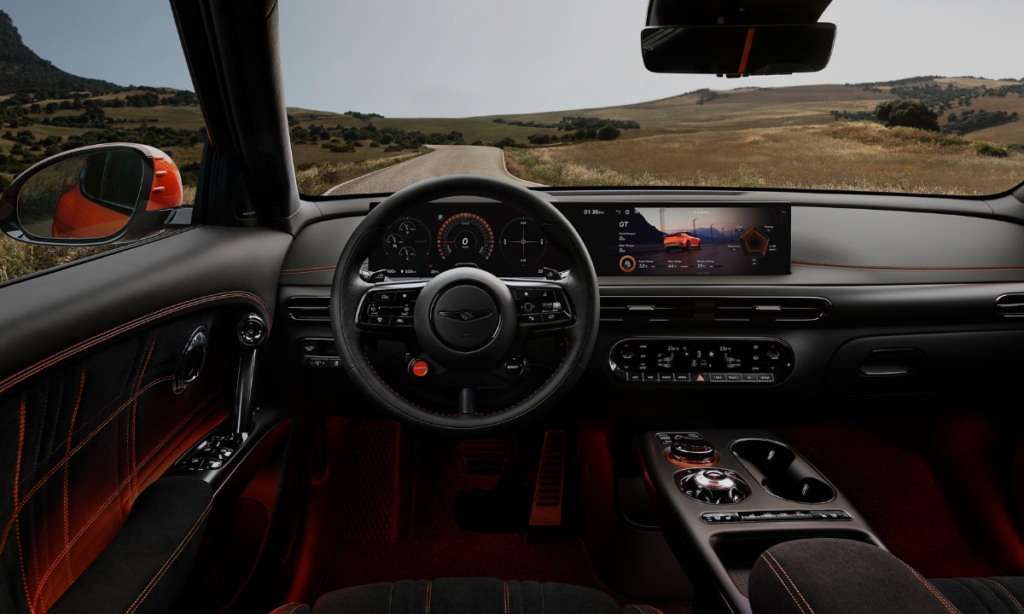
Under Scrutiny: Virtual Gear Shift & Drift Modes
To distance the Magma from sterile EV straight-line speed runs, Genesis has loaded the platform with highly complex driver-engagement software.
- Virtual Gear Shift (VGS): This system uses complex software maps to artificially interrupt motor torque, mimicking the step-shifts, inertia jolts and tachometer drop of an eight-speed dual-clutch combustion gearbox.
- Acoustic Synthesiser: It pairs these virtual gear shifts with active interior and exterior speakers, generating a mechanical crescendo that perfectly matches the simulated gear changes.
- Torque-Vectoring Drift Mode: By utilizing a highly advanced electronic limited-slip differential (e-LSD), the drivetrain can divert up to 100% of available electric torque strictly to the wider 275mm Pirelli rear tyres to sustain controlled power-slides.
[Virtual Gear Shift Active] ➔ Torque Interruption Jolt ➔ Multi-Sensor Speaker Roar ➔ Simulates 8-Speed Dual-Clutch Engine Revs
On track, the VGS system is highly controversial. For traditionalists, simulating engine noises and gear steps in a single-speed EV sounds like a gimmick. But behind the wheel, the illusion is shockingly convincing. It provides the muscle-memory braking markers and engine-braking sensations that EV track cars desperately lack.
Factual Contenders: The Six-Figure Track EV Battle
| Feature | Genesis GV60 Magma | Hyundai Ioniq 5 N | Porsche Macan 4S Electric |
| Price (MRLP) | $130,000 | $110,384 | Approx. $149,300 |
| Peak System Output | 478 kW (Boost) | 478 kW (Boost) | 380 kW (Overboost) |
| Virtual Gearbox Sim | Yes (Standard) | Yes (Standard) | No (Pure EV linear) |
| Cabin Appointment | Suede/Nappa, 17-Spk B&O | Performance Mesh Seats | Leather (highly optionalized) |
| Chassis Setup | Lowered, e-Suspension | Heavy track-focused weld | Air suspension standard |
The Verdict
The Genesis GV60 Magma is a highly sophisticated piece of hardware. If you want pure, clinical track times, a Porsche Macan remains the benchmark for badge status and handling feel. But if you want a luxury package that can instantly transform into an absolute tyre-shredding track weapon at the press of a button, the Magma’s clever chassis calibrations make it one of the most exciting, engaging performance cars on the 2026 market.