


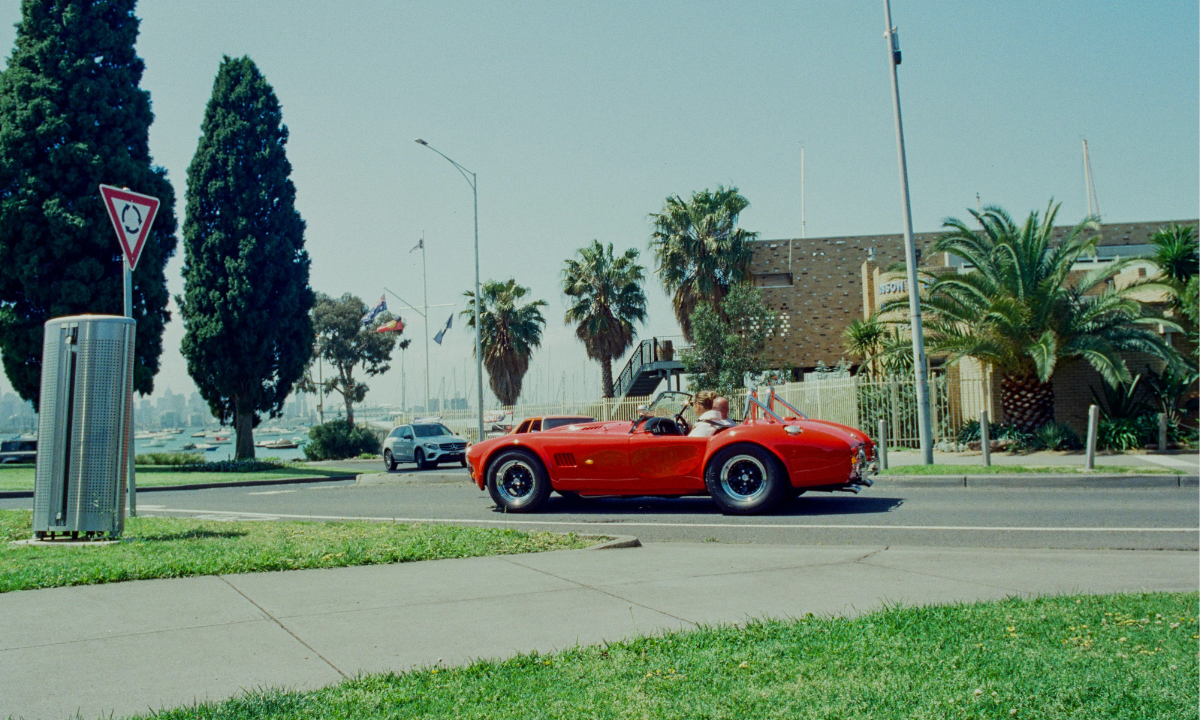

The classic car market in Australia has officially entered a new era. The dizzying, speculative frenzy of the post-pandemic boom where average locally built chrome-bumper holdens and legacy Japanese sports cars commanded unhinged, property-tier prices has formally corrected itself.
What we are looking at is a normalized, rational buyer’s market. Speculators and “flippers” have exited the arena, leaving behind a healthier landscape populated by genuine enthusiasts and long-term collectors.
But owning a classic car down under isn’t just about watching the market curves. To successfully keep a piece of automotive history on Australian roads without burning a hole through your bank account, you need a firm grasp on two things: state-enforced conditional registration rules and shifting local valuation trends.
The Enabler: Demystifying the Club Plate Schemes
Traditional comprehensive registration in Australia can easily cost upwards of $800 to $1,200 annually per vehicle. If you own a collection of vintage iron that only sees the tarmac on sunny Sunday mornings, full registration makes zero financial sense.
Enter the Club Permit Scheme (CPS), colloquially known across Australia as “Club Plates,” “Historic Plates,” or “CH/M Plates.”
These state-run frameworks provide a massive registration and Transport Accident Commission (TAC) discount for historically significant vehicles, provided you abide by strict operational limitations.
Financial Car Club Member ➔ Obtain RWC / Safety Check ➔ Apply to State Authority ➔ Receive Logbook & Club Plates
While the overarching goal is uniform across the country, enforcement varies wildly by state:
1. Victoria (VicRoads Club Permit Scheme)
Victoria runs arguably the most flexible and widely praised system in the country.
- The Rule: Vehicles must be at least 25 years old. Owners can choose between a 45-day or 90-day annual permit.
- The Logbook System: You are issued a physical logbook. Every single calendar day the car is driven more than 100 metres from its garage address, the driver must fill out an entry in ink before the wheels turn. If you drive past midnight, you must fill out a second line for the new calendar day.
2. New South Wales (Transport for NSW Historic & Conditional Schemes)
NSW differentiates strictly between pure stock historic vehicles and modified variants.
- The Rule: Vehicles must be at least 30 years old. Under the Historic Vehicle Scheme (HVS), the car must be as close to factory specification as possible. If it has period-correct modifications, it moves to the Classic Vehicle Scheme (CVS).
- The Logbook System: NSW utilizes a 60-day logbook system for personal use and club-sanctioned events.
3. Queensland (TMR Special Interest Vehicle Scheme)
Queensland takes a much more rigid stance compared to its southern neighbors.
- The Rule: Vehicles must be at least 30 years old.
- The Trap: Unlike VIC and NSW, QLD does not feature a flexible day-counter logbook for generalized driving. Use is strictly limited to officially sanctioned club events, road testing within a 15km radius, or traveling directly to and from a licensed repair workshop.
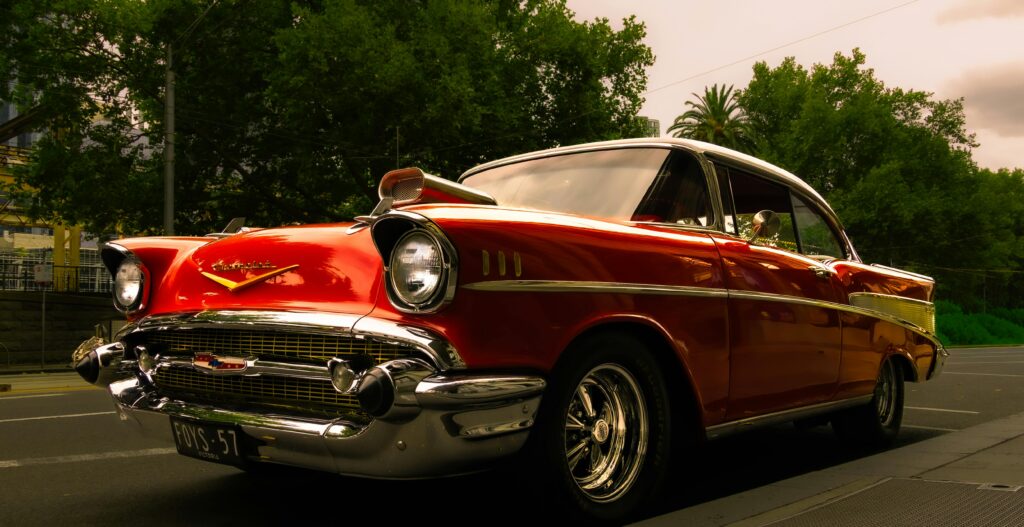
2026 Valuation Trends: What’s Hot and What’s Not
The steep market correction that defined the previous 24 months has flattened out, creating an excellent entry window for buyers. Data from major digital marketplaces and local auction firms like Shannons and Collecting Cars reveal a profound shift in where the money is moving.
| Vehicle Segment | Market Trajectory | 2026 Outlook |
| Aussie Muscle (Toranas, Falcon GTs) | Significant Correction | Down 20-30% from peak highs. Purely numbers-matching, tier-one survivors are holding value; average clones are sitting unsold. |
| Millennial JDM Hero Cars (Supras, GT-Rs) | Stabilizing / High Floor | Prices have plateaued but remain high. The global demand fueled by US import eligibility limits significant drops. |
| Radwood Era (80s/90s European) | Steady Appreciation | Modern classics like the Porsche 996, BMW E36 M3, and Mercedes R171 roadsters are seeing strong, steady organic growth. |
| Pre-War / Early Post-War | Soft Demand | Generationally losing momentum. Younger buyers are largely bypassing 1930s-1950s British and American tourers. |
The Rise of the “Analog Premium”
A highly visible macro trend driving valuations is the premium placed on analog engagement. As new showroom cars become heavily digitalized, electronic, and insulated, collectors are paying a premium for pure mechanical feedback.
Cars like the Ferrari F430 or early Porsche 911 (996) manual variants are experiencing consistent interest. They represent the sweet spot of automotive engineering: modern enough to stop and steer reliably on Australian roads, but analog enough to feature a mechanical throttle body, hydraulic steering, and a traditional manual gearbox.
A Warning for Buyers on the Horizon: The ongoing rollout of Australia’s New Vehicle Efficiency Standard (NVES) won’t penalize historic cars directly, but shifting fuel volatility and the expansion of inner-city low-emission zones mean that fuel accessibility and parts infrastructure will become core valuation drivers over the next decade.
The RaceWire Takeaway
If you are buying a classic car solely to park it in a bubble and watch an investment curve tick upward, you are entering the market at the wrong time. But if you are buying a vehicle to drive, maintain, and immerse yourself in a vibrant local community, this is the best market conditions we have seen in years. By leveraging state club plate schemes, you can keep running costs exceptionally low while preserving an irreplaceable piece of motoring culture.