



The Australian classic and collector car market has reached a critical inflection point. The post-2020 speculative bubble where almost anything with four wheels and a chrome bumper commanded inflated asking prices has officially deflated. Panic buyers and short-term flippers have largely exited the building, giving way to a far healthier, data-driven buyer’s market.
For enthusiasts and savvy collectors, 2026 represents a prime buying window. Values have stabilized at realistic floors, creating predictable growth trajectories for vehicles backed by scarcity, cultural significance and strong generational nostalgia.
Modelled after Hagerty’s famous global index, Racewire’s 2026 Bull Market List identifies 10 standout vehicles in the Australian market poised to outperform the broader classic landscape over the next three to five years.
1. The 1970s Aussie Muscle Royalty
1.1. 1970–1972 Ford Falcon XY GT & XA GT
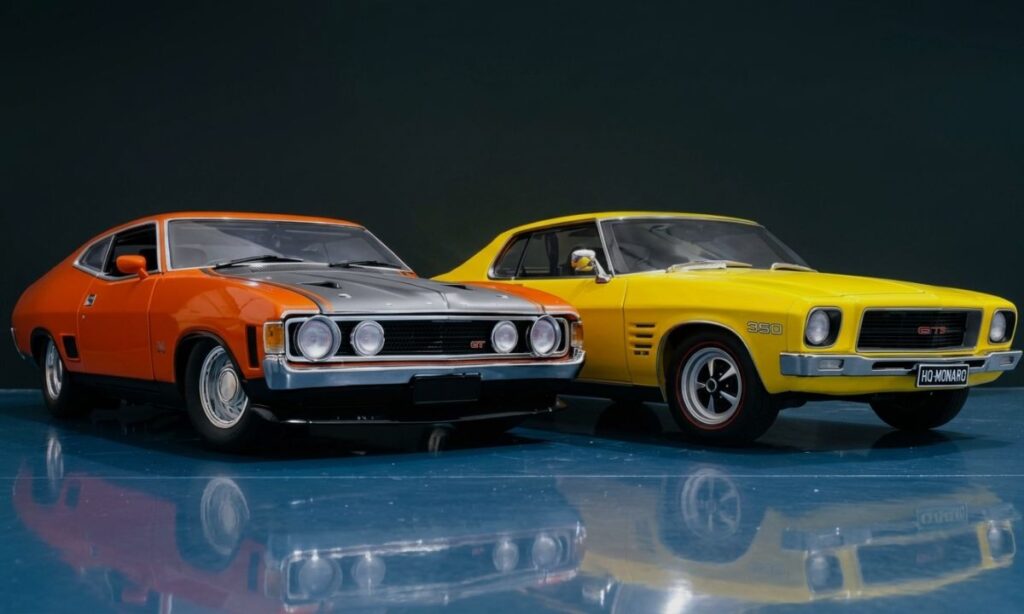
- Why It’s Moving: The ultimate symbol of local homologation history. While top-tier Phase III GT-HOs remain million-dollar museum pieces, standard matching-numbers XY and XA GTs have consolidated after past peaks. Scarcity and blue-chip status ensure these remain the safest long-term store of capital in local motoring.
- 2026 Median Range: $160,000 – $240,000 AUD (Fair to Excellent)
1.2. 1968–1974 Holden Monaro GTS (HK, HT, HG & HQ)
- Why It’s Moving: As the last remnants of Australia’s factory manufacturing era settle into history, original multi-carb and V8 Monaros are undergoing tightened ownership. Early two-door pillarless coupes are increasingly locked away in private collections, reducing market liquidity and driving up values for complete, documented examples.
- 2026 Median Range: $110,000 – $195,000 AUD
2. The 1990s JDM Performance Icons
2.1. 1989–1994 Nissan Skyline GT-R (R32 “Godzilla”)
- Why It’s Moving: The R32 GT-R’s motorsport lineage in Australian Group A racing makes it a local icon. With US import eligibility fully open and global demand surging, clean, unmolested R32s are getting harder to find locally. Unmodified or period-correct examples are pulling away from heavily modified track builds.
- 2026 Median Range: $85,000 – $135,000 AUD
2.2. 1993–2002 Toyota Supra RZ / SZ-R (JZA80 Turbo)
- Why It’s Moving: Gen X and elder Millennial buyers are entering their peak earning years, driving high demand for 1990s Japanese poster cars. Factory twin-turbo, 6-speed manual (V160) JZA80 Supras have transitioned from tuner platforms to serious global collectibles.
- 2026 Median Range: $95,000 – $160,000 AUD
3. Modern Aussie Future Classics
3.1. 2015–2017 Holden Commodore SS-V Redline (VF Series II)
- Why It’s Moving: The final expression of the rear-wheel-drive V8 Holden sedan. Powered by the 6.2-litre LS3 V8, low-kilometre manual VF II Redlines are widely recognized as the peak of daily-usable Aussie muscle. Stock, low-mileage examples are already beginning their upward appreciation curve.
- 2026 Median Range: $55,000 – $82,000 AUD
3.2. 2002–2016 Ford Falcon XR6 Turbo (BA through FG X)
- Why It’s Moving: Australia’s homegrown forced-induction hero. The legendary 4.0-litre Barra inline-six offers bulletproof reliability and incredible tuning potential. Unmodified, factory-manual BA/BF/FG XR6 Turbos are becoming genuinely scarce as abused examples exit the fleet.
- 2026 Median Range: $22,000 – $48,000 AUD
4. European Heritage & Specialty Picks
4.1. 1998–2005 Porsche 911 Carrera (996 Generation)
- Why It’s Moving: Long overlooked due to its water-cooled engine and “fried egg” headlights, the 996 is the last lightweight, compact 911. As air-cooled 911s and 997s remain out of reach for many, purists are turning to manual 996 Carrera 2s, driving a steady price recovery.
- 2026 Median Range: $65,000 – $95,000 AUD
4.2. 1971–1976 Alfa Romeo 2000 GT Veloce (105 Series Coupe)
- Why It’s Moving: Designed by Bertone, the 105 Series coupe delivers classic Italian twin-cam motoring at an accessible price point compared to contemporary Ferraris or Jaguars. Well-sorted, rust-free Australian-delivered 2000 GTs enjoy a passionate, supportive enthusiast base.
- 2026 Median Range: $50,000 – $85,000 AUD
4.3. 1988–1991 HSV VN SV5000 / Group A Era
- Why It’s Moving: Early Holden Special Vehicles (HSV) builds represent the bridge between raw 1980s homologation specials and modern performance tuning. The VN SV5000, with its distinctive body package and enhanced 5.0L V8, is gaining recognition as a key piece of early HSV heritage.
- 2026 Median Range: $45,000 – $75,000 AUD
4.4. 2001–2006 BMW M3 (E46 Generation)
- Why It’s Moving: Widely regarded as one of the finest driver’s cars ever produced, the E46 M3 pairs a high-revving, naturally aspirated 3.2-litre S54 inline-six with timeless proportions. Factory manual coupes in original condition are seeing strong demand from collectors worldwide.
- 2026 Median Range: $48,000 – $80,000 AUD
2026 Bull Market Valuation Matrix
| Vehicle Model | Category / Era | Key Valuation Driver | 2026 Entry AUD Range |
| Ford Falcon XY/XA GT | Aussie Muscle (70s) | Homologation provenance & scarcity | $160,000 – $240,000 |
| Holden Monaro GTS | Aussie Muscle (70s) | Two-door coupe scarcity & brand legacy | $110,000 – $195,000 |
| Nissan Skyline R32 GT-R | JDM Icon (90s) | Group A racing heritage & global demand | $85,000 – $135,000 |
| Toyota Supra JZA80 Turbo | JDM Icon (90s) | Millennial nostalgia & V160 gearbox demand | $95,000 – $160,000 |
| Holden VF II SS-V Redline | Modern Aussie V8 | End of Australian auto manufacturing | $55,000 – $82,000 |
| Ford Falcon XR6 Turbo | Modern Aussie Turbo | Legendary Barra 4.0L engine platform | $22,000 – $48,000 |
| Porsche 911 (996 Manual) | Euro Classic | Value catch-up against 993/997 generations | $65,000 – $95,000 |
| Alfa Romeo 2000 GT Veloce | Euro Classic | Timeless Bertone styling & twin-cam engine | $50,000 – $85,000 |
| HSV VN SV5000 | Early HSV Heritage | Early HSV production numbers & nostalgia | $45,000 – $75,000 |
| BMW M3 (E46 Manual) | Euro Performance | Peak naturally aspirated S54 engine era | $48,000 – $80,000 |
Why These Cars Over Others?
Three core factors separate the cars on this list from general used vehicles:
- Demographic Earning Shifts: Wealth is shifting toward Gen X and Millennial buyers who are purchasing the poster cars of their youth (1990s and 2000s performance models).
- Usability & Parts Support: Models like the VF II Redline or XR6 Turbo offer modern air conditioning, safety and reliability, allowing owners to drive and enjoy their investment on weekends.
- Irreplaceable Scarcity: Local manufacturing has ended permanently in Australia. You cannot build more genuine V8 Commodores, Barra Falcons, or matching-numbers 70s GTs.
The Golden Caveat: Buy for Passion First
A Note on Classic Car Ownership:
Never purchase a classic or performance vehicle purely as a financial investment. Ongoing costs including specialized insurance, secure storage, rust prevention and mechanical maintenance will erode marginal financial gains. Buy the car you genuinely want to drive, care for and look back at in the garage. Any financial appreciation should be treated as a welcome bonus.
Practical Purchasing Advice for 2026 Buyers
- Verify Provenance Early: Always conduct a thorough PPSR check to confirm clear title, lack of financial encumbrances and zero write-off history. On classic muscle, verify matching engine numbers and compliance plates against owner club registries.
- Prioritize Originality Over Modifications: In almost every case, a stock, factory-spec vehicle will appreciate faster and attract a broader pool of future buyers than a heavily modified alternative.
- Invest in a Pre-Purchase Inspection: Spend the money on a brand specialist or independent mechanic who understands model-specific failure points, rust zones and body filler detection before transferring funds.