


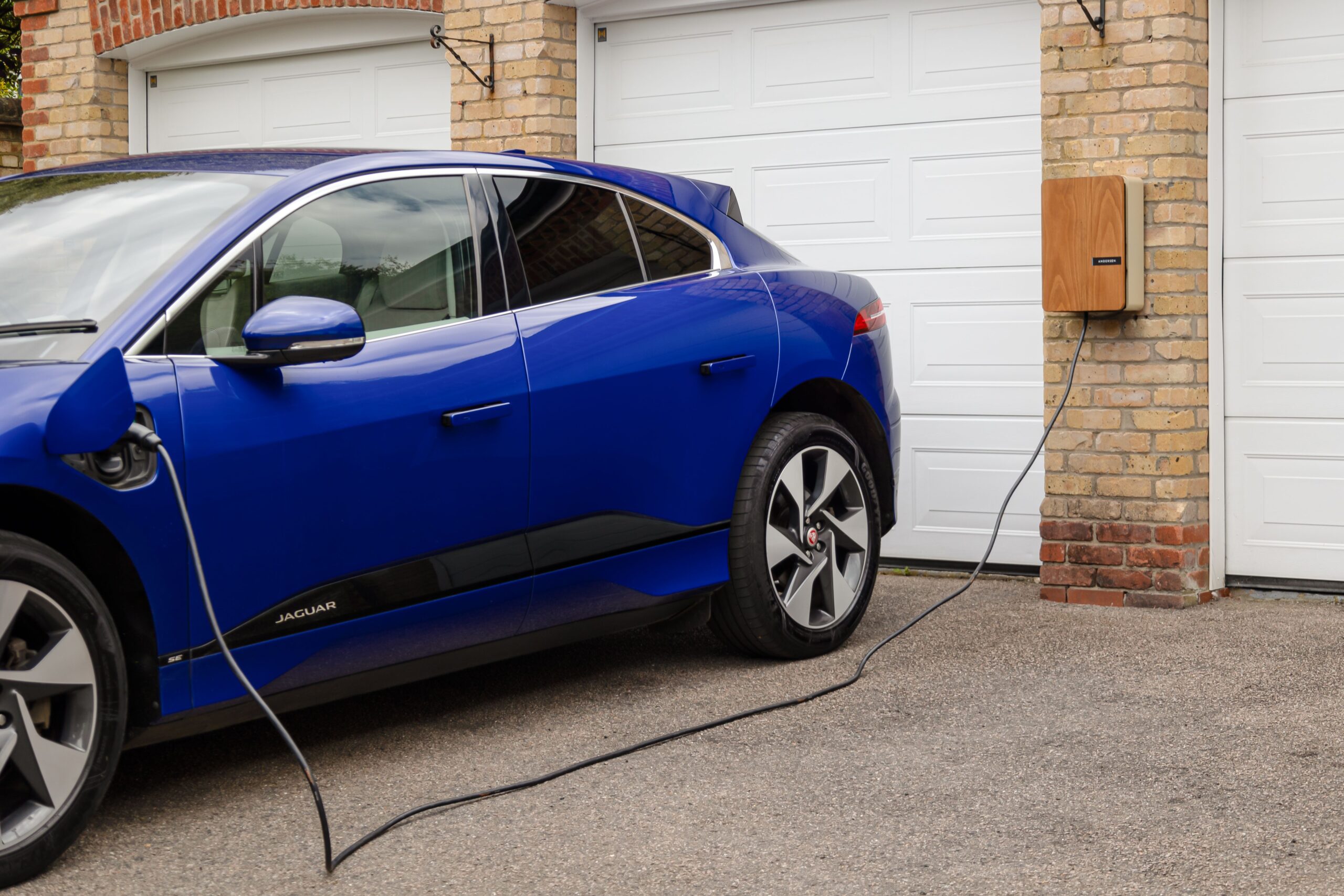

Home charging transforms EV ownership from convenient to genuinely practical. But installation costs, electrical requirements, and rebate eligibility confuse many buyers. Here’s what actually matters.
Charging Types Explained
Level 1 (240V Single Phase)
Uses standard Australian wall socket (10 amp circuit). Adds approximately 5 km of range per hour. Full recharge from empty takes 20-30 hours on a typical 60 kWh battery.
Cost: $0 to install (uses existing outlet)
Practical for: Overnight charging when you have unlimited time, supplementary charging
Reality: Most owners find this impractically slow. Only viable if you drive under 50 km daily and charge overnight.
Level 2 (Single Phase Wall Box)
Standard 10 kW capacity on single-phase supply (common in Australian homes). Adds 30-40 km range per hour. Full recharge takes 4-8 hours depending on battery size.
Installation cost: $1,200-1,800 AUD (charger + electrical work)
Charger cost alone: $600-1,200 AUD
Electrical upgrade needed: Most homes require licensed electrician assessment ($200-400)
Practical for: Most Australian households. Overnight charging delivers ready vehicle daily.
Level 2 (Three-Phase Wall Box)
Three-phase homes (typically rural or recently built properties) support 22 kW charging. Adds 60-80 km range per hour. Full recharge in 2-3 hours.
Installation cost: $1,400-2,200 AUD
Charger upgrade: +$300-500 for three-phase capable unit
Requires: Three-phase connection (check your meter it displays this clearly).
Level 3 (DC Fast Charging)
This is public network territory 50-350 kW chargers for 10-30 minute top-ups. Home installation is cost-prohibitive ($15,000+) and unnecessary for daily use.
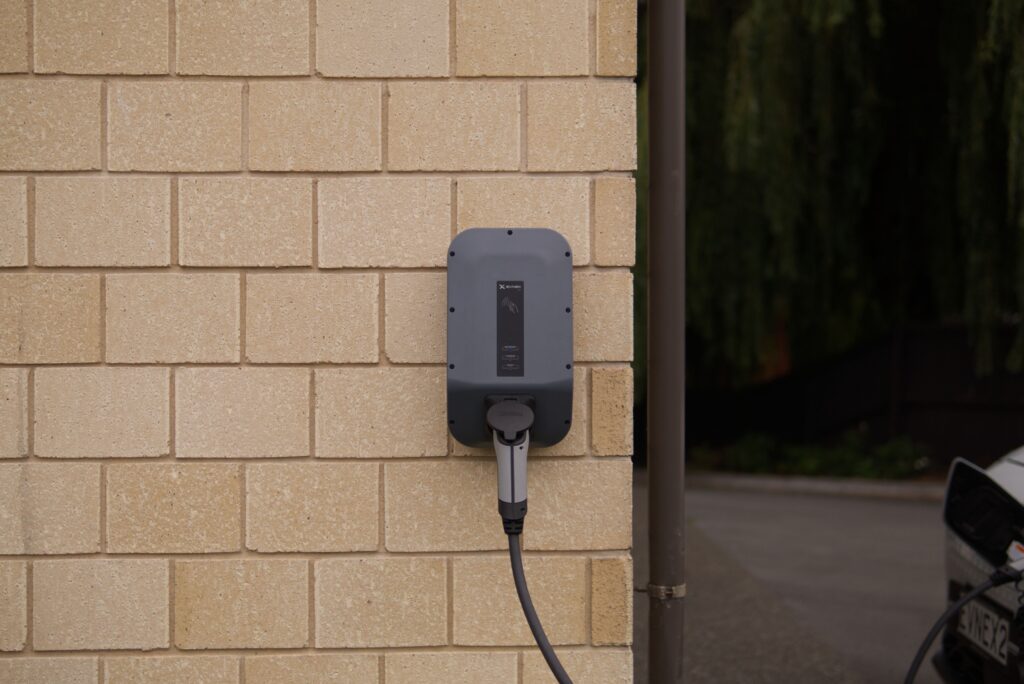
Installation Step-by-Step
Step 1: Electrical Assessment ($200-400)
Licensed electrician evaluates:
– Your current electrical capacity (typical homes have 60-100 amp main switch)
– Cable run distance from meter to intended charger location (long runs need bigger cables, higher cost)
– Any capacity upgrades needed
Most Australian homes can accommodate 10 kW charging without meter upgrades. Older homes (pre-2000) sometimes need circuit upgrades ($800-1,500).
Step 2: Charger Selection ($600-1,200)
Popular options:
– Wallbox Pulsar Plus: $995 AUD (compact, Australian brand support)
– Tesla Model Wall Connector: $800 AUD (if you own Tesla)
– Zappi (with solar integration): $1,150 AUD (premium option)
All support smartphone app monitoring and scheduled charging valuable for off-peak electricity rates.
Step 3: Installation ($800-1,000)
Licensed electrician completes:
– Cable installation from meter to charger
– Weatherproofing considerations (outdoor installation needs protection)
– Permits/council notification (varies by local authority, $50-150)
– Safety testing and certification
Installation typically takes 4-6 hours.
Australian Rebates & Incentives
Federal Level
No current federal rebate for charger installation (as of June 2026). Previous Powering-Up scheme concluded December 2025.
State-Based Programs
Victoria:
$225 rebate on charger hardware (capped scheme, application-based)
Eligibility: New EV purchases under $70,000 AUD
NSW:
No charger rebate, but offers $557 annual registration discount for EVs
South Australia:
50% rebate up to $250 on charger hardware (transitional program through 2026)
Eligibility: First home buyers with new EVs
Queensland/Tasmania/ACT:
No dedicated charger rebates currently
Check your state’s energy authority website for current offerings schemes change frequently.
Electricity Cost Reality
Charging at home costs approximately $0.12-0.18 per kWh (varies by plan and state).
For a typical 60 kWh battery:
– Full charge cost: $7.20-10.80 AUD
– Daily 40 km commute (low-efficiency estimate 8 km/kWh): $0.50-0.75
Compare this to petrol at $1.67/liter:
– Equivalent 40 km petrol journey: $4.50-6.00 AUD (at 11 L/100km)
Home charging costs roughly 10-15% of equivalent petrol driving.
Off-Peak Rates
Many energy providers offer special EV rates off-peak charging (midnight-6am) at $0.08-0.12 per kWh. Programmable chargers make this transparent charge overnight when rates are lowest.
Annual savings using off-peak charging: $500-800 for average users.
Installation Timeline
Typical process takes 3-4 weeks:
– Week 1: Electrician assessment and quote
– Week 2: Permit approval and charger order
– Week 3: Installation
– Week 4: Testing and certification
Some electricians have 4-6 week waitlists in capital cities during peak EV adoption season (September-November).
Common Installation Challenges
Cable Run Distance: If your intended charger location is far from the meter (e.g., across the property), expect +$300-500 for extended cable requirements.
Garage Type: Garages with concrete floors require conduit/protection for cable runs (+$200-400). Wooden garage with interior access is simpler.
Existing Load: Homes with electric hot water systems or air conditioning already using significant capacity may need $800-1,500 electrical upgrades.
Heritage/Rental Constraints: Rental properties need landlord approval. Heritage homes sometimes face installation restrictions.
| VERDICT Home EV charging installation costs $1,500-2,500 AUD for typical Australian homes an investment that pays for itself through fuel cost savings within 3-4 years. |