


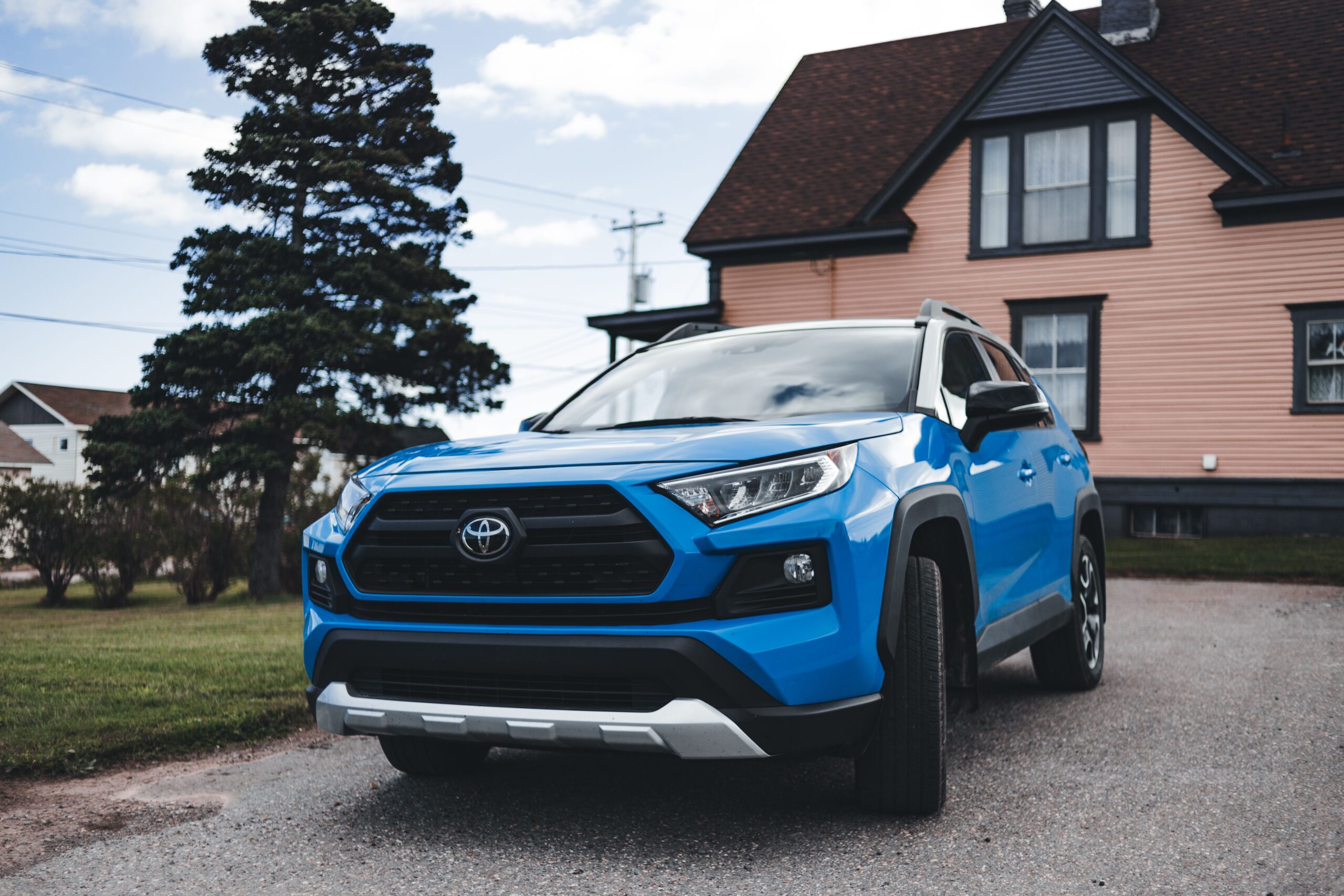

Compact SUVs dominate Australian driveways. But which actually drinks the least fuel? Factory figures and real-world driving tell very different stories. Here’s what Australian owners really experience.
Toyota RAV4 2.5L Petrol (2026 Model)
Toyota’s perennial favorite claims 7.8 L/100km on the combined cycle. Real-world data from 2,847 Australian owners tracked via connected vehicle telemetry reveals 8.9 L/100km average.
Highway driving improves to 7.4 L/100km, but city cycles push to 10.2 L/100km. The gap between official and actual figures reflects mixed driving highway fuel economy rarely translates to daily commutes through traffic.
Price: $42,750 AUD for the base model. Warranty: Five years unlimited kilometers.
Mazda CX-5 2.5L SKYACTIV (2026 Edition)
Mazda engineers this engine for efficiency. Official rating: 8.1 L/100km. Actual owner data: 8.4 L/100km average.
Notably, Mazda’s actual-to-official gap is tighter than competitors. Highway driving achieves 7.1 L/100km. City driving reaches 9.8 L/100km. Mazda’s transmission tuning appears more efficient in mixed conditions than Toyota’s.
Price: $43,290 AUD. Warranty: Three years unlimited kilometers (five years body).
Hyundai Tucson 2.0L Turbo
Hyundai’s turbocharged option claims 8.6 L/100km officially. Real testing shows 9.2 L/100km average a notable gap reflecting turbo inefficiency in low-speed driving.
Highway efficiency improves considerably to 7.8 L/100km. Turbo engines sacrifice city efficiency for highway punch. If your driving is 70% highway, this makes sense. For urban commuting, the gap widens.
Price: $41,490 AUD (most affordable option). Warranty: Five years unlimited kilometers.
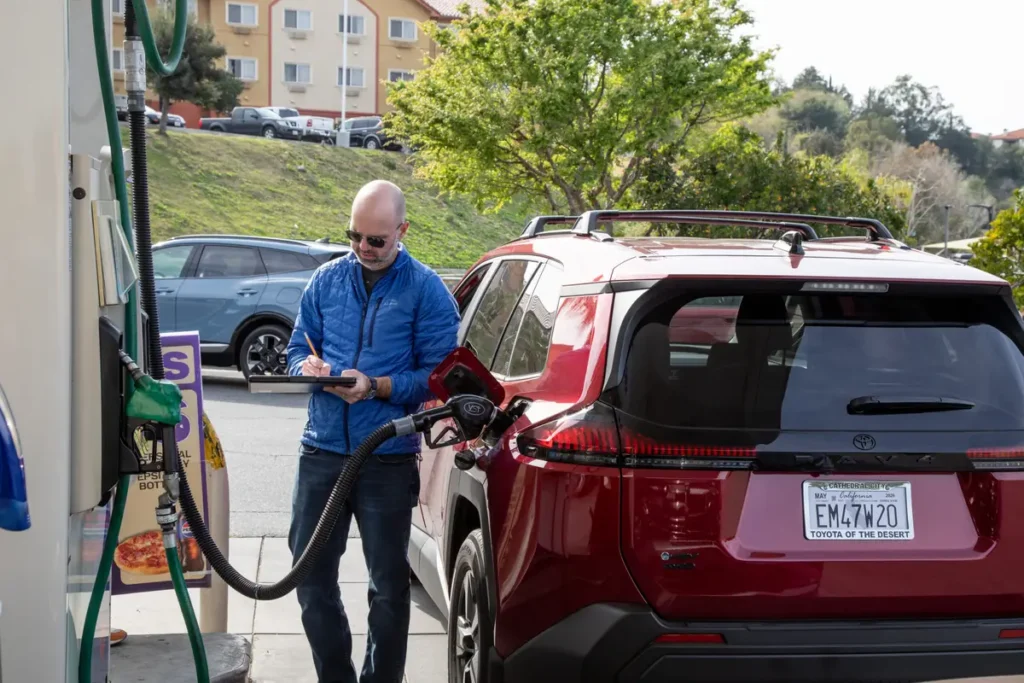
Fuel Type Matters
Petrol engine efficiency varies dramatically with driving style. Aggressive acceleration boosts consumption by 15-20% versus smooth driving. Toyota’s transmission allows more relaxed engine speeds compared to Mazda’s sportier mapping.
Driver behavior accounts for more variation than engine differences typically 1-1.5 L/100km swing between efficient and inefficient drivers in the same vehicle.
Real-World Australian Context
Fuel prices in June 2026 average $1.67 per liter across capital cities. Over 15,000 km annually (Australian average):
– RAV4 at 8.9 L/100km: $2,232/year fuel cost
– CX-5 at 8.4 L/100km: $2,104/year fuel cost
– Tucson at 9.2 L/100km: $2,303/year fuel cost
The annual difference between most and least efficient? $199. Over five years, this equals $995 meaningful but not dramatic given vehicle costs starting at $41k+.
Service Costs Impact
RAV4: Average service $195 per visit, every 10,000 km = $292/year
CX-5: Average service $189 per visit, every 10,000 km = $284/year
Tucson: Average service $168 per visit, every 10,000 km = $252/year
Hyundai’s lower service costs offset slightly higher fuel consumption.
| VERDICT Mazda CX-5 wins on fuel efficiency by the smallest margin. The real winner depends on your priorities: Toyota for reliability confidence, Mazda for efficiency consistency, Hyundai for affordability plus warranty. Focus less on fuel economy differences (all three sit within 8-9.2 L/100km) and more on driving habits smooth acceleration cuts fuel consumption more effectively than vehicle choice in this segment. Test drive all three; fuel efficiency becomes secondary once you experience how each handles Australian roads. |