



The Bathurst 1000: A History of Australia’s Greatest Race
There is one event in the Australian motorsport calendar that does not need an introduction.
You either know Bathurst, or you are about to.
The Bathurst 1000 is not just a race. It is not simply a motor racing event on a circuit in regional New South Wales. It is a piece of Australian identity that has been building, lap by lap, since 1963.
This is the story of how a mountain outside a country town became the most famous piece of road in Australian motorsport.
Mount Panorama: The Circuit
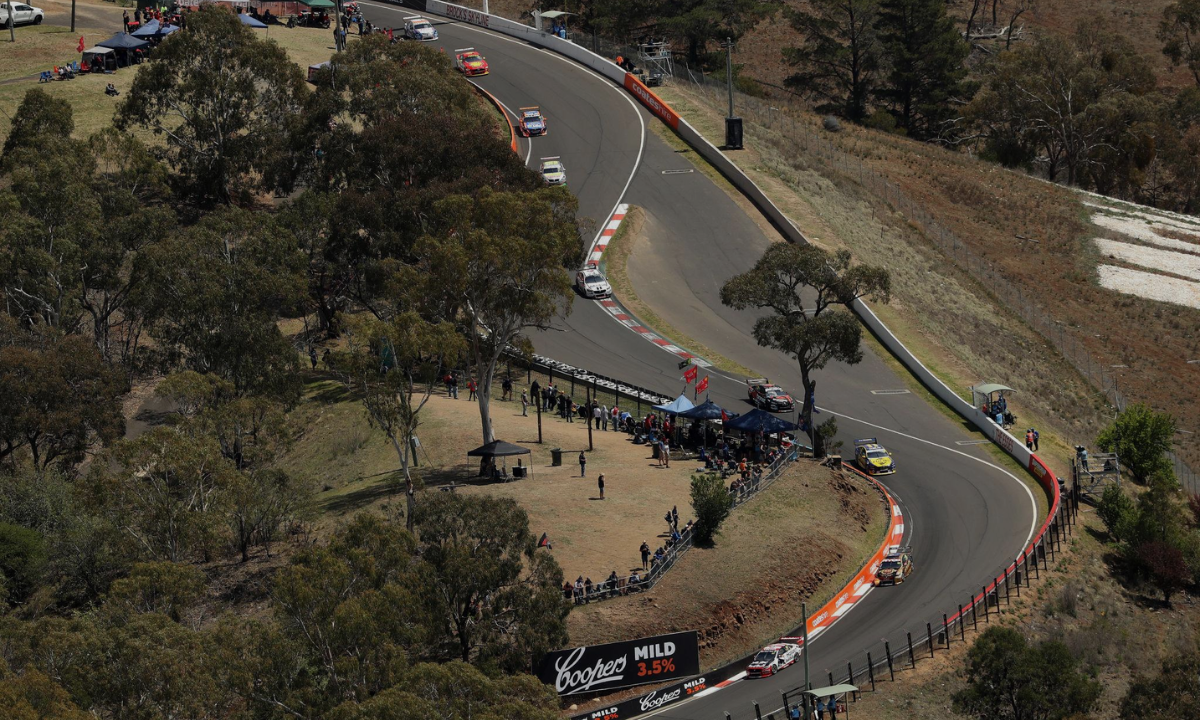
The Mount Panorama circuit does not look like a modern race track because it is not one.
It is a public road. You can drive it in your own car any day of the year at the local speed limit past the same kerbs and barriers that the fastest touring cars in the country will attack at speeds that make the mountain genuinely dangerous.
The layout is 6.2 kilometres of elevation change, blind crests, concrete walls, and corners that demand total commitment. Griffins Bend leads to the Mountain Straight. The Cutting narrows the track to near nothing. Skyline is where the circuit disappears from view entirely before the terrifying downhill run through The Dipper and Forrest’s Elbow into the Chase and the finish line.
No other circuit on the Australian calendar or in most of the world combines public road character with genuine danger in the same way.
When drivers talk about Bathurst with reverence, this is why.
The Beginning: 1963
The first Bathurst race for production cars was held in 1963.
It was a six-hour event, run under the flag of the Armstrong 500, and it began a tradition that would grow into one of the most followed sporting events in the country.
The early years were dominated by the battles of the era the Ford versus Holden rivalry that ran through Australian life with the kind of intensity that is hard to fully convey to someone who did not live through it. This was not a car company preference. For many Australians, it was tribal. You were a Ford family or a Holden family and those lines were drawn hard.
The race gave that rivalry somewhere to settle things properly.
The Ford vs Holden Era
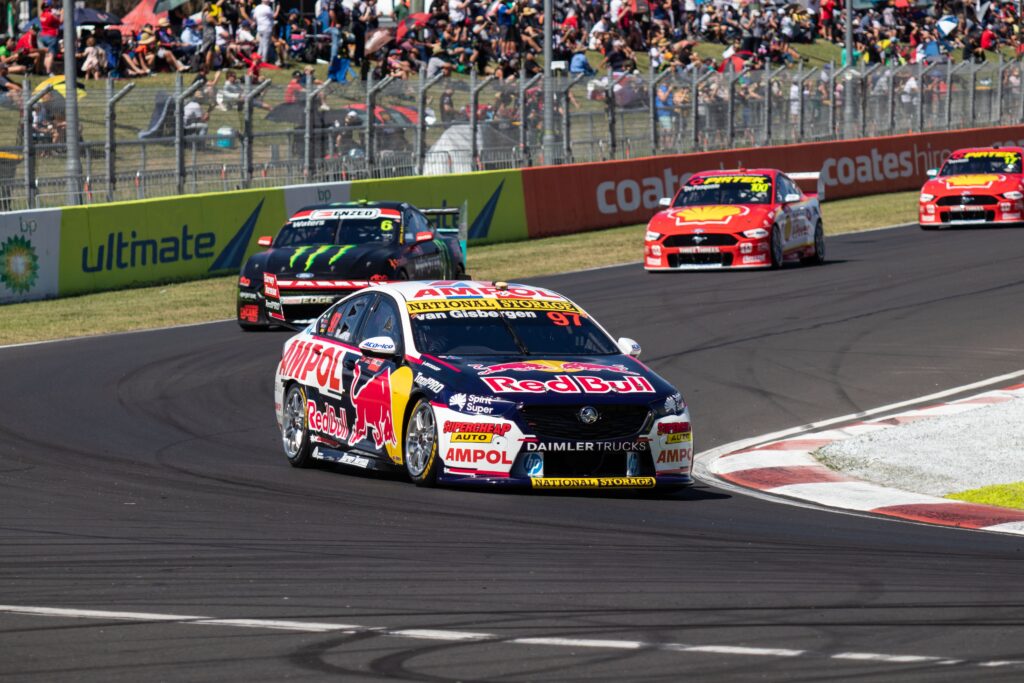
Through the 1960s and 1970s, Bathurst was the centrepiece of the Ford versus Holden war.
Falcons and Toranas, Monaros and Mustangs, GTHOs and Commodores the names alone still carry weight for anyone who grew up watching Australian touring car racing.
The 1977 race involving Peter Brock and the Holden Dealer Team was among the defining moments of that era. Brock, more than any other driver, became synonymous with Bathurst taking the mountain on terms that no driver had matched before and building a connection with the circuit that lasted his entire career.
To Australian car people, Brock is Bathurst. The reverence has not faded.
The Two-Driver Format and Growing Intensity
The move to a 1000-kilometre format requiring two drivers per car added a strategic layer that changed the race entirely.
Now the story was not just about who drove fastest. It was about pit strategy, driver pairings, fuel calculations, tyre management, and the mechanical resilience of machinery pushed to its absolute limit over a full day of racing.
This complexity made the event richer. It created scenarios where a race leader could be stranded by a refuelling penalty. Where a car running fifth with an hour to go could win. Where the wrong tyre choice at the wrong moment could end a campaign that had been building all year.
Bathurst rewards precision as much as speed. That is part of what makes it genuinely compelling.
The Great Races
Every decade of Bathurst has produced moments that became permanent fixtures in Australian motorsport memory.
The fog-shrouded races where cars disappeared into cloud on the mountain. The battles fought across the final laps between machinery that had been competing flat-out for eight hours. The retirements that cost wins that seemed inevitable. The victories built from positions that looked hopeless.
The 1992 race produced what many still call the greatest individual performance in the event’s history. The 2017 edition produced one of the most dramatic finishes. Between those bookmarks, there are hundreds of hours of racing that made the event what it is.
Ask any Australian who follows motorsport about their Bathurst memory. Everyone has one.
Bathurst in the Modern Era
The Supercars Championship era brought international attention, manufacturer investment, and television audiences that turned Bathurst weekend into a genuine national event.
The October long weekend is now part of the Australian sporting calendar in a way that very few motorsport events anywhere in the world achieve. Campsites fill up days in advance. Families return to the same spots year after year. The crowds understand the race they are not casual spectators.
The introduction of the Bathurst 12 Hour for GT and endurance machinery has added a February dimension that broadened the circuit’s profile internationally. Teams from Europe and Asia now make Bathurst a target event.
Mount Panorama became, on the strength of its character alone, a circuit with a global reputation.
Why It Still Matters
Bathurst matters because it is genuinely hard.
It asks something of every car and driver that comes to it. It punishes mistakes instantly and rewards bravery precisely, and it does so on a circuit that the public can drive themselves slowly and still feel the weight of what happens there at racing speed.
It matters because it has seventy years of stories attached to it, and those stories are not trivia. They are part of how Australian car culture understands itself. It matters because nothing else in Australian motorsport comes close to what Mount Panorama produces on race day.