


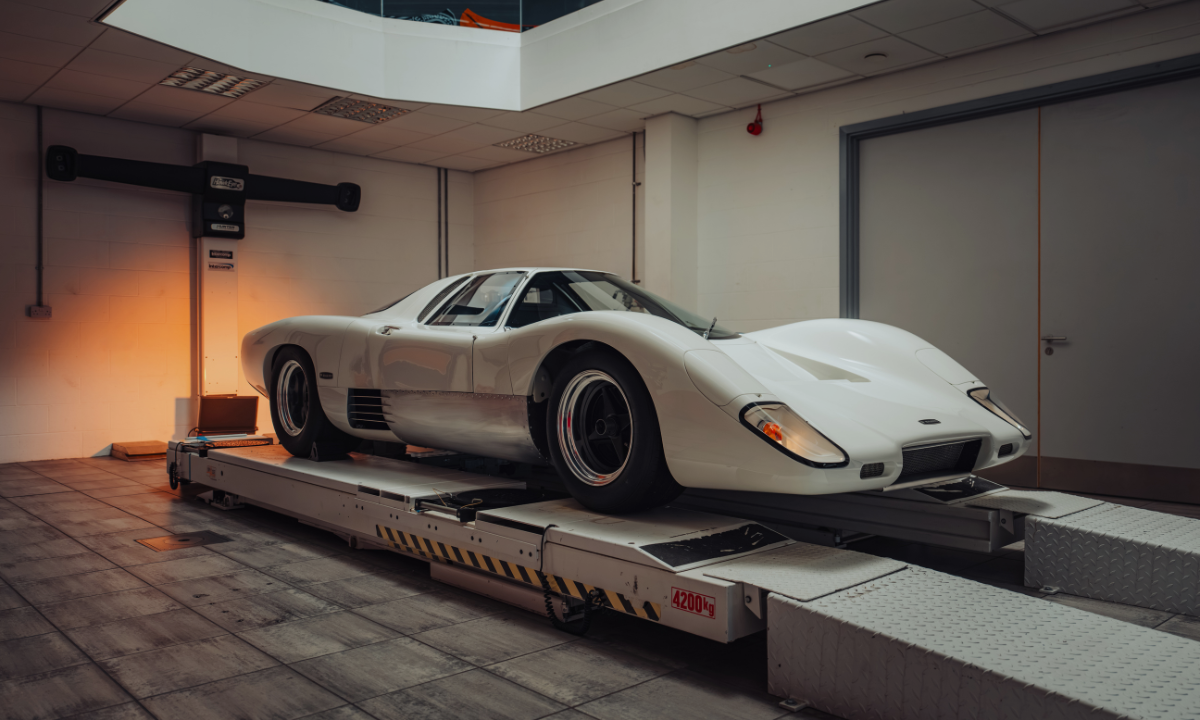

When modern automotive enthusiasts discuss the genesis of McLaren Automotive, the conversation immediately defaults to the legendary, center-seated 1992 McLaren F1. But the ultimate origin story of the brand actually dates a quarter-century earlier. Long before the F1 rewrote the hypercar rulebook, company founder Bruce McLaren envisioned a road-going weapon derived straight from his dominant motorsport machinery: the 1969 McLaren M6GT.
Tragically, Bruce’s untimely passing in 1970 shelved the proposed 250-unit production run, leaving the project as one of history’s greatest automotive “what-ifs.” Now, to spearhead its new heritage restoration program, McLaren Special Operations (MSO) has spent 3,000 hours executing a meticulous, factory-backed ground-up build to bring Bruce’s exact vision to life.
The Monocoque DNA: From Can-Am to Asphalt
The M6GT was originally conceived as a closed-cockpit coupe variant of the earth-shaking M6A Can-Am racing car the very machine that handed Bruce McLaren the 1967 Can-Am championship. Rather than assembling a modern replica from scratch, MSO treated the build as an act of strict historical custodianship.
MSO technicians sourced a verified, period-built M6A open-cockpit race chassis as the vehicle’s structural backbone. Because the bodywork had to be built completely from scratch, specialists tracked down the original, surviving 1960s fiberglass molds in the United Kingdom.
Peering closely at the panels reveals a quiet record of history; MSO intentionally chose not to smooth out or “correct” the subtle imperfections and shape modifications visible within the legacy molds, preserving the true developmental evolution of the 1960s prototype.
Forensic 1960s Mechanical Specifications
To stay completely faithful to the original blueprint, MSO rejected the urge to implement modern digital engine management systems or forced induction. The powertrain is entirely analog:
| Engineering Component | MSO Heritage Build Specification | Historical Ancestry |
| Engine Architecture | Naturally Aspirated Small-Block Chevrolet V8 | Derived from 1960s Sports-Racer Programs |
| Cylinder Head Spec | Period-correct “camel hump” cast heads | Matched to original 1969 blueprints |
| Power Output | Over 400 horsepower | Exact original target metrics |
| Acoustic Induction | Eight open intake velocity trumpets | Classic Can-Am structural configuration |
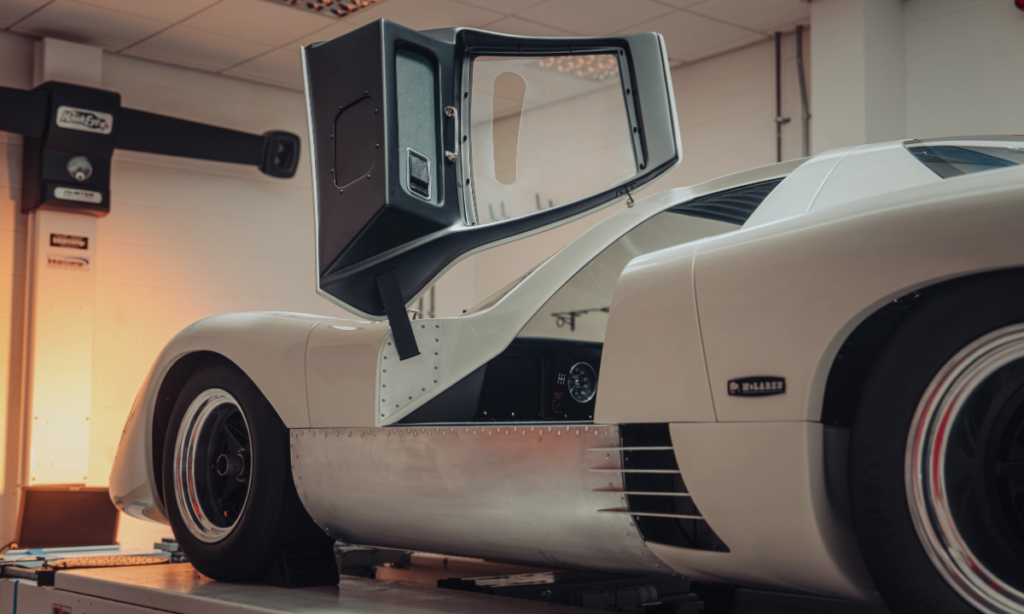
| Chassis Fasteners | Closed aluminum dome rivets | Installed by aerospace industry specialists |
The Colnbrook Legacy
Stepping over the massive, race-derived door sills reveals a minimalist 1970s cockpit anchored by analog Jaeger gauges, a simple three-spoke steering wheel, a hand-turned solid walnut gear knob and classic green vinyl seats featuring heat-seamed detailing.
The exterior of the one-off coupe is finished in a bespoke, cream-based paint code dubbed Colnbrook White. This is a direct historical nod to McLaren’s original workshop premises in Colnbrook, located near Heathrow Airport, where Bruce would rapidly return to develop his road car concepts immediately after stepping off international flights.
The Verdict
Unveiled dynamically at the 2026 Goodwood Festival of Speed, the MSO-restored M6GT is a profound reminder of where McLaren’s performance identity was born. With its sweeping front guards, low-slung nose and signature butterfly doors, it isn’t just an elite pieces of engineering it is the physical manifestation of Bruce McLaren’s dream, finally fulfilled by the factory he created.