



The Mechanic’s Life
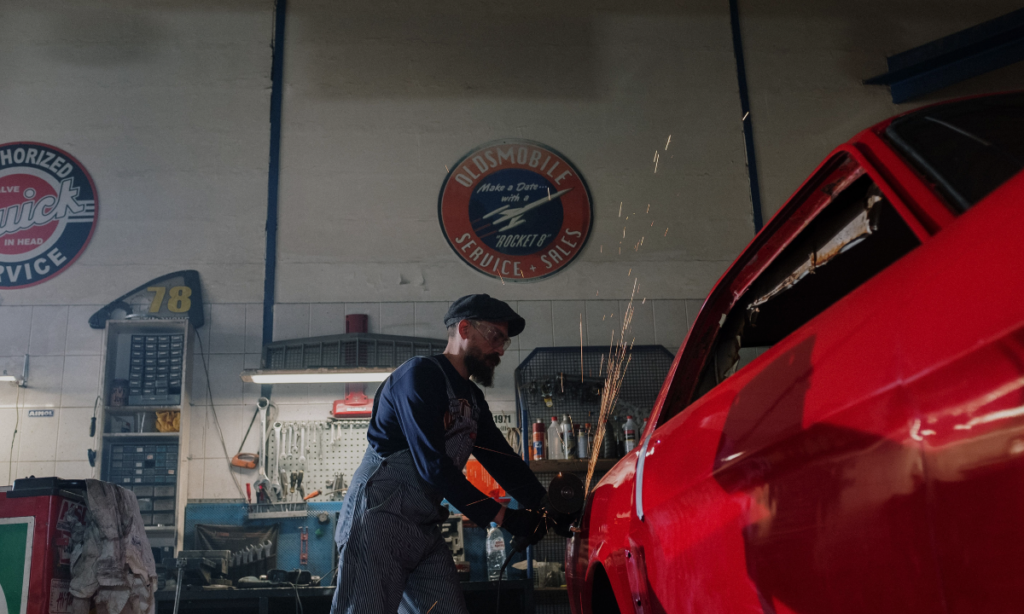
Meet Peter a fourth-generation automotive mechanic in rural Victoria. His family established a workshop in 1954. Peter learned mechanical principles alongside his father, inheriting not just tools but a philosophy: cars deserve respect and mechanical knowledge deserves preservation.
Peter’s workshop operates on principles unchanged since the 1950s take the time necessary to do the job properly, keep detailed records and prioritise customer relationships over quick profits. In an industry consolidating toward franchised service centres, Peter’s independent workshop thrives because customers value expertise and honesty.
“A car is like a patient,” Peter explains. “You listen to it, diagnose properly and address the root cause, not symptoms. Most shops would sell people unnecessary repairs. That destroys trust. I’d rather have a customer for 40 years than make $500 today by being dishonest.”
Peter’s workshop hosts a genuine community customers stop by, share coffee, discuss cars. His relationship with each regular customer spans decades. He knows their family names, their driving habits, their vehicle quirks.
This is automotive passion in its purest form not about speed or aesthetics, but about mechanical understanding and human connection.
The Collector’s Journey
Emma started collecting cars in 1998 with a single Datsun 240Z she found abandoned in a Sydney garage. Friends thought her mad the vehicle was rusted, non-functional, cosmetically neglected. Emma saw potential.
Over three years, she restored the Datsun to concourse condition. The process taught her welding, paint restoration, mechanical rebuilding, electrical systems. The restored Datsun won multiple show awards but, more importantly, connected Emma to the classic car community.
Today, Emma owns six classic vehicles spanning four decades. Each tells a story. The Datsun taught her restoration principles. A 1966 Holden EH represents her father’s favorite car from childhood. A British Racing Green Jaguar marks her first international competition victory. A modern Porsche represents her present interests.
“Collecting isn’t about ownership,” Emma reflects. “It’s about stewardship. These cars existed before me; they’ll exist after. I’m simply preserving them for the next generation while enjoying them myself.”
Emma’s collection represents approximately $400,000 in value significant wealth for a high school art teacher. Yet she describes it as an investment that appreciates while delivering genuine joy. “My friends spend $20,000 annually on overseas holidays,” Emma notes. “I spend it maintaining my cars and enjoying them. Different priorities, equally valid.”
The Builder’s Obsession
Mark transformed a neglected 1984 Toyota Corolla into an award-winning drift car over five years. The project consumed him every spare moment, every dollar earned went into the build.
From the outside, Mark’s obsession seemed wasteful. Why spend $50,000 transforming a vehicle worth $5,000 when new? Why dedicate 2,000 hours to welding, fabrication and tuning?
Mark’s answer is simple: “It’s not about the car’s value. It’s about creating something. I’m an artist; my canvas is automotive engineering. This Corolla represents thousands of hours of problem-solving, learning and creative expression. No gallery could display my work more meaningfully than I can drive it.”
Mark’s drift car travels nationwide to competitions and exhibitions. He’s won regional championships, but trophies aren’t why he builds. He builds because the process itself problem-solving, learning, creating feeds his soul.
The Driver’s Truth
Sarah drives a modified 1990s Honda Civic. To non-enthusiasts, it’s an aging economy car. To Sarah, it’s freedom and expression.
Sarah grew up economically disadvantaged her family’s vehicle defined their social position. Driving hand-me-downs shamed her as a teenager. Today, she deliberately chose a modest car and modified it herself, transforming it into something uniquely hers.
“My car says I refuse to care about others’ judgments,” Sarah explains. “I modified it MY way, with MY colours, expressing MYSELF. That’s powerful. Every time I drive it, I remember that I built this. I control my story.”
Sarah’s car connects her to a community sharing similar values. In forums and at meets, people discuss modifications, share techniques, celebrate each other’s builds. It’s a meritocracy where quality work earns respect regardless of car value or driver background.
Why We Love Cars
Beneath these diverse stories runs a common theme: cars represent control, creativity and community in a chaotic world.
Control: Mechanical systems operate predictably. Modify an engine, it responds with measurable results. Life’s chaos diminishes; logical cause-and-effect reigns.
Creativity: Cars are blank canvases for engineering, aesthetic and mechanical expression. They enable creation in ways few other hobbies allow.
Community: Automotive enthusiasts transcend social boundaries. A mechanic, collector, builder and casual driver share experiences, knowledge and passion that override background differences.
The Verdict
Australia’s automotive culture thrives because cars mean more than transportation. They represent passion, creativity, mechanical understanding and community belonging.
Whether you’re a weekend track driver, classic car collector, backyard builder, or devoted mechanic, you’re part of a tradition celebrating human ingenuity and mechanical appreciation. The time invested, money spent and passion dedicated reflects not wasteful extravagance but meaningful human connection.
The cars themselves are simply the medium. The real story is always the person.
Common Automotive Passion Expressions
| Expression | Time Investment | Financial Investment | Motivation |
| Restoration | 1,000–5,000 hours | $20,000–$100,000+ | Preservation and craftsmanship |
| Building/Modification | 1,000–10,000+ hours | $10,000–$50,000+ | Creative expression |
| Collecting | Ongoing | $100,000–$1,000,000+ | Curation and stewardship |
| Racing/Performance | 500–1,000+ hours/year | $10,000–$50,000+/year | Competition and skill development |