


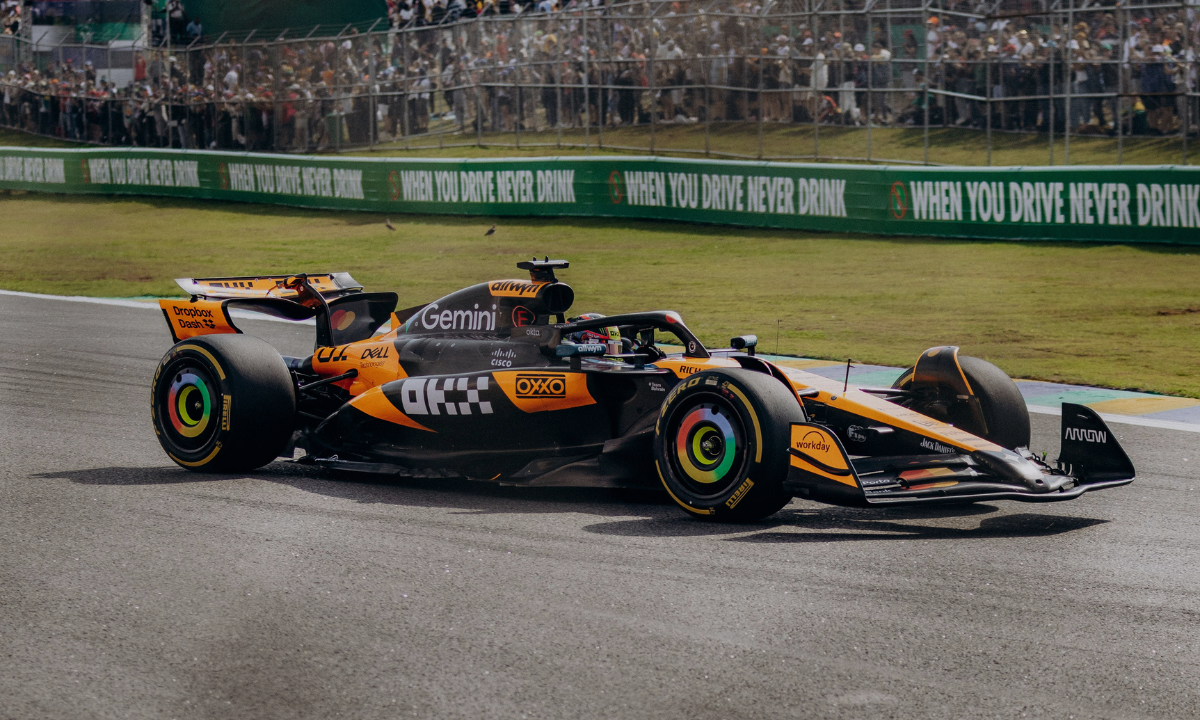

The Albert Park Circuit (1996–2025)
Albert Park hosted the Australian Grand Prix from 1996 through 2025, transitioning F1’s season opener from Brazil and establishing Melbourne as Formula 1’s traditional season start.
Circuit Characteristics
Circuit length: 5.303 km (3.295 miles)
Lap time: Modern F1 cars complete Albert Park in approximately 1 minute 15–18 seconds
Notable corners:
Turns 1–2: High-speed chicane providing overtaking opportunity
Turn 3 hairpin: Tightest corner on circuit, critical braking point
Jones Bay chicane: Mid-lap technical section
Lakeside Drive: Fast section alongside Albert Park lake
The circuit’s design creates relatively balanced challenges neither speed-dependent (favouring Ferrari/Mercedes) nor handling-dependent (favouring Red Bull); this unpredictability made Albert Park racing entertaining and occasionally unpredictable.
Historic Moments and Champions
Memorable Victories
1996 (First race): Damon Hill (Williams) won the inaugural Australian Grand Prix, establishing Melbourne as an exciting F1 venue.
2009: Jenson Button’s dominant victory and his McLaren’s eventual world championship demonstrated technical innovation and driver skill.
2016: Nico Royce dominated in Mercedes, beginning the hybrid-engine era’s dominance.
2019 and beyond: Mercedes’ winning streak established Albert Park as a venue particularly suited to Mercedes’ technical approach.
Australian Drivers’ Legacy
Mark Webber: The most successful Australian F1 driver achieved multiple Grand Prix victories (9 wins) and world championship contention across Red Bull and Porsche careers. Webber raced Albert Park annually, never winning at home a bittersweet legacy reflecting home circuit pressure.
Daniel Ricciardo: The modern Australian F1 driver, Ricciardo achieved Grand Prix victories but faced similar home track anxiety. His Albert Park performances were often respectable but never championship-defining.
The Australian Grand Prix’s Unique Character
Albert Park developed distinctive personality within the F1 calendar:
Season opener energy: As F1’s traditional season start (2000–2025), Albert Park carried energy and anticipation unique to season openings. Drivers, teams and fans arrived fresh; outcomes established championship narratives.
Autumn weather: March conditions in Melbourne brought variable weather occasionally rain, occasionally extreme heat, occasionally perfect conditions. This unpredictability created tactical challenges and entertainment value.
Passionate local fanbase: Australian crowds supported their drivers passionately, creating atmosphere distinctly Australian enthusiastic but friendly, knowledgeable about Formula 1 while celebrating local success.
Technical challenges: Albert Park’s balance of fast and technical sections rewarded complete drivers. Setup choices mattered enormously; dominant cars elsewhere occasionally struggled at Albert Park’s specific demands.
Impact on Australian Motorsport
Formula 1’s presence in Melbourne elevated Australian motorsport culture globally. Young Australians grew up watching F1 at Albert Park, inspiring careers in motorsport engineering, driving and motorsport business.
The Grand Prix’s television coverage provided global exposure to Australian motorsport capabilities. International sponsorship, engineering talent recruitment and manufacturer partnerships flowed from F1 visibility.
Bathurst 1000 and other Australian racing series benefited from F1’s cultural prominence larger audiences, greater media interest and international recognition.
Economic and Cultural Significance
The Australian Grand Prix generated:
Approximately $200–$300 million annual economic impact (spectators, hospitality, tourism)
300,000+ spectators across the race weekend
Global media coverage reaching 600+ million households
Infrastructure improvements to Melbourne and Albert Park facilities
Beyond economics, the Grand Prix became part of Melbourne’s identity a signature sporting event defining the city globally.
The Legacy Transition
Formula 1’s decision to relocate from Albert Park to international venues marked the end of an era. While F1 continues globally, Australia’s Grand Prix represented 25 years of tradition, history and cultural significance that cannot be simply replaced.
The transition reflects F1’s global expansion and commercial priorities. Yet for Australian motorsport enthusiasts, Albert Park’s historical significance endures. Modern F1 generations will not experience Australian Grand Prix racing, making the historical period (1996–2025) increasingly nostalgic and valued.
Preserving the Memory
Albert Park circuit remains available for other motorsport use. Australian Supercars occasionally race there; international GT racing competitions utilise the venue. The circuit evolves but preserves its F1 heritage through historical awareness and documentation.
For Australian motorsport enthusiasts, memories of Albert Park’s Formula 1 era represent a golden period when Australia participated at motorsport’s highest level with world championship significance.
The Verdict
The Australian Grand Prix at Albert Park represented a unique chapter in Formula 1 history. For 25 years, Melbourne hosted international motorsport’s pinnacle championship, shaped by Australian conditions, Australian drivers and Australian fan passion.
While F1 moves forward globally, Albert Park’s historical significance endures. It was where Australian motorsport culture intersected with world championship racing, where local drivers competed at home against global icons and where Melbourne claimed status as a world-class sporting city.
For those who experienced Australian Grand Prix racing, Albert Park remains an iconic memory a moment when Formula 1 belonged, however briefly, to Australia.
Australian Grand Prix Quick Facts
| Detail | Information |
| Years Hosted | 1996–2025 (29 years) |
| Circuit Location | Albert Park, Melbourne |
| Circuit Length | 5.303 km |
| Typical Attendance | 250,000–350,000 spectators |
| Economic Impact | $200–$300 million annually |
| Most Successful Team | Mercedes (8 wins) |
| Australian Race Wins | Mark Webber (0 wins, best result) |
| Season Status | Typically season opener |