


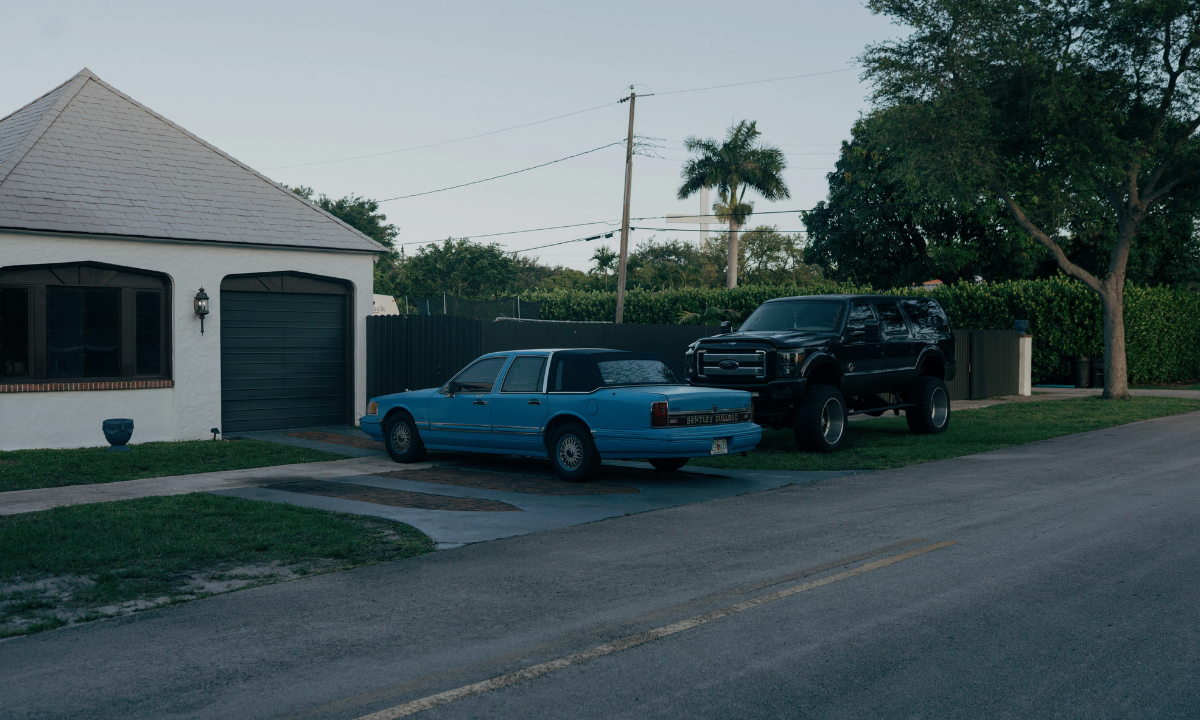

Walk out into any modern Australian suburban driveway today, and the view is remarkably uniform: a towering sea of dual-cab diesel utes, white mid-size family SUVs, and high-tech electric commuter hatches. But rewind the clock some thirty years to the mid-to-late 1990s, and the architecture of the Australian street looked entirely different.
Long before high-riding crossovers took over the market, our neighborhoods were dominated by low-slung sedans, quirky family haulers, and cheap, colorful three-door hatchbacks.
They weren’t supercars, and they rarely made it onto bedroom wall posters. But these were the cars that did the heavy lifting of everyday Australian life taking us on school runs, coastal holidays, and supermarket trips. Let’s take a nostalgic look back at the suburban icons that defined an era.
1. The Toyota Tarago (Second Generation)
Before the phrase “SUV” entered the common Australian vocabulary, if you had a large family, you owned a people-mover. And in the 1990s, the undisputed king of the school drop-off zone was the second-generation Toyota Tarago.
Legacy Family Vans: Utilitarian, boxy, based on commercial delivery vans.
The 1990s Tarago Leap: Futuristic “egg” styling, passenger-car refinement, dual sliding mid-row seats.
With its radically smooth, aerodynamic, egg-shaped silhouette and mid-mounted engine configuration, the Tarago looked like a spaceship landing in a standard brick-veneer driveway. It single-handedly shifted the public perception of multi-seat vans from basic commercial mini-buses into comfortable, highly integrated family capsules. While finding a clean, unblemished survivor today is incredibly rare, the Tarago remains a defining symbol of 90s family life.
2. The Hyundai Excel (X3 Generation)
In 1994, a colorful wave of compact Korean hatchbacks swept across the country and permanently disrupted Australia’s automotive retail landscape. Driven by aggressive marketing and unprecedented “drive-away” pricing deals, the third-generation Hyundai Excel became an absolute market juggernaut.
The P-Plater Default: If you got your provisional driver’s license in the late 90s or early 2000s, chances are either you or your closest mate owned a three-door Hyundai Excel finished in vibrant Aqua Blue or Canary Yellow.
They were cheap to run, remarkably robust, and infinitely abuse-tolerant. Ironically, while thousands were crushed or driven into the ground, the model found a second life decades later via the highly popular, tightly regulated Hyundai Excel Racing Series. This competitive series keeps these humble 90s commuter cars screaming around Australia’s premier race circuits to this day.
3. The Aussie Sedan Heavyweights: Commodore vs. Falcon
No retrospective of Australian automotive culture is complete without mentioning the eternal civil war played out across suburban streets: Holden Commodore vs. Ford Falcon.
In the 90s, the battle lines were drawn between the curved, organic lines of Holden’s VR/VS/VT series and the wide, aggressive stance of Ford’s EF/EL and controversial AU Falcon. These were full-sized, rear-wheel-drive, locally manufactured workhorses. They towed our boats, loaded up our boots for family road trips, and filled the company fleet car parks from Sydney to Perth.
The Racewire Takeaway
It is easy to celebrate million-dollar exotic exotics, but the true history of a car culture is written by the vehicles that regular people actually lived in. The Taragos, the Excels, and the iron-block local sedans of the 1990s provided the literal soundtrack to our childhoods and early driving years. They remind us that a car doesn’t need a carbon-fibre chassis to hold a lasting place in our collective memories.