


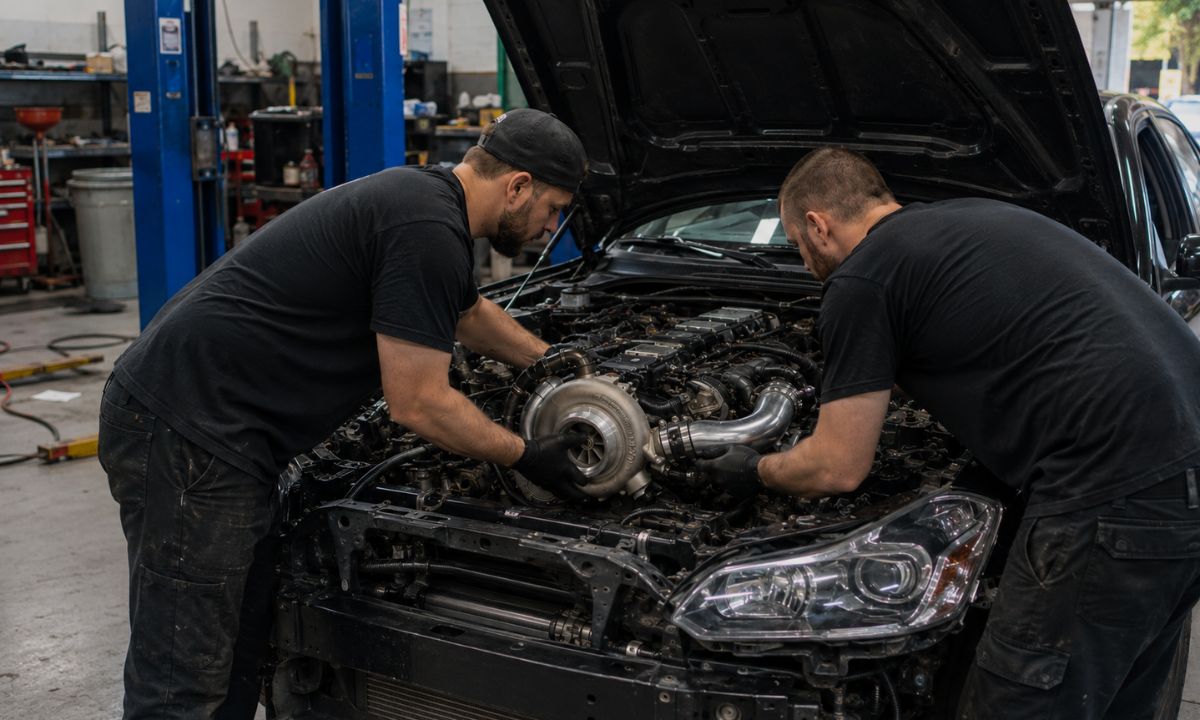

Turbocharging represents the most popular performance modification in Australia and, with 2026 regulation changes, also the most compliance-intensive. A quality turbocharger installation can reliably increase engine power 30-50%, crossing the new mandatory 15% documentation threshold nearly universally. Understanding the complete turbocharger modification journey from planning through registration approval determines whether your project becomes exhilarating upgrade or expensive compliance nightmare.
Why Turbocharging: Performance Gains and Reality
A naturally aspirated 2.0-litre four-cylinder engine producing 150 kilowatts benefits dramatically from turbocharger technology. Forced induction compresses intake air, cramming significantly more oxygen into each combustion cycle. The result: identical engine architecture produces 40-50% more power (target: 210-225 kilowatts) through turbocharging alone. Additional ECU tuning can push gains even further.
These figures attract enthusiasts legitimately. Standard 2.0-litre engines driving 0-100 km/h in approximately 8.5 seconds become turbocharged versions achieving 5.5-6.5 seconds. That’s measurable, thrilling improvement.
However, turbocharger installations trigger the most scrutiny under 2026 ADR requirements precisely because power increases reliably exceed 15% threshold.
The Three-Phase Turbocharger Installation Process
Phase 1: Planning and Baseline Assessment (Week 1) Before purchasing turbocharger hardware, establish your vehicle’s baseline power output through dyno testing. This seemingly obvious step is frequently skipped by enthusiasts eager to begin installation. Skip it at your peril baseline documentation proves modification effect and validates compliance thresholds.
Baseline dyno testing costs approximately AUD $400–$600 and requires 2–3 hours. The resulting dyno sheet documents your vehicle’s stock power output, establishing your compliance baseline.
Phase 2: Hardware Installation and Preliminary Testing (Weeks 2-4) Quality turbocharger installations demand professional execution from experienced shops. A complete installation involves:
• Turbocharger unit and matching compressor/turbine components
• Custom exhaust manifold fabrication (approximately AUD $2,000–$3,500)
• Intercooler installation (approximately AUD $1,500–$2,500)
• Fuel system upgrade and ECU recalibration (approximately AUD $1,500–$2,000)
• Boost control system installation (approximately AUD $800–$1,200)
• Cooling system modifications and additional radiator capacity (approximately AUD $1,000–$1,500)
Total installation costs typically range AUD $8,000–$14,000 depending on vehicle platform, turbocharger choice and desired power target. This significantly exceeds casual modification budgeting.
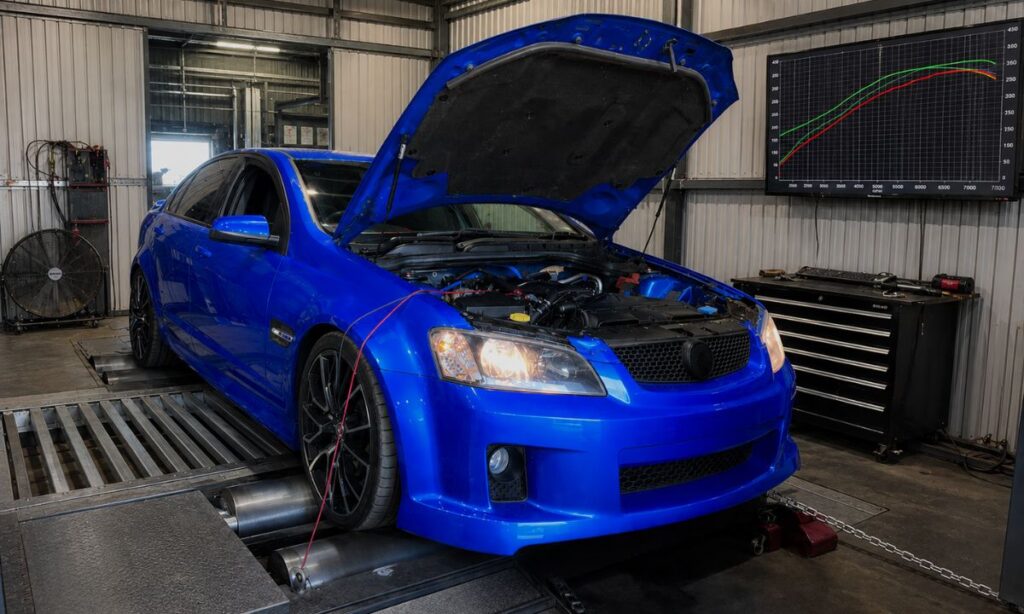
Phase 3: Dyno Testing, Engineering Assessment and Registration (Weeks 5-8) Post-installation dyno testing validates actual power increase against engineering predictions. This critical step proves compliance or identifies problems requiring rectification.
Expect dyno testing to reveal 35-50% power increase reliably exceeding the mandatory 15% threshold. Document this precisely; the dyno report becomes mandatory registration submission material.
Simultaneously, engage certified automotive engineer for comprehensive assessment. Engineers verify structural integrity, cooling adequacy, fuel system sufficiency, brake system capability, suspension geometry and safety systems functionality. This engineer’s assessment typically costs AUD $1,500–$2,500.
Power Target Strategy: Where Ambition Meets Practicality
Enthusiasts frequently target excessive power increases attempting 60-80% improvements through extreme boost pressures and aggressive tuning. These ambitions frequently conflict with reliable operation and engineering soundness.
More prudent approach: target 35-45% power increase through conservative boost pressure (0.6–0.8 bar), quality fuel and professional ECU tuning. This range delivers genuinely exciting performance improvement while maintaining reliability and engineering viability.
A 150 kilowatt engine targeting 200-210 kilowatts achieves rapid acceleration gains without demanding exotic fuel, extreme boost, or suspension upgrades that exceed practical boundaries.
Fuel Considerations: Premium Fuel Requirements
Turbocharger installations typically demand premium (PULP 98) fuel instead of standard unleaded (PULP 91). Premium fuel provides higher octane rating (resistance to pre-ignition), allowing higher boost pressures and more aggressive tuning without risking engine knock.
Premium fuel costs approximately AUD $0.20–$0.40 more per litre than standard unleaded. For a 60-litre fuel tank, premium fuel adds approximately AUD $12–$24 per fill-up approximately AUD $600–$1,200 annually for typical driving patterns.
This recurring cost often surprises new turbo owners and warrants factoring into modification economics.
Insurance Implications: The Overlooked Cost
Modified vehicles require specialist insurance through dedicated providers. Standard comprehensive policies exclude modified vehicles or impose substantial surcharges (frequently 50-100% increases).
Expect annual premiums for turbocharged vehicles to increase from approximately AUD $1,200–$1,600 (standard) to AUD $2,500–$4,000 (modified specialist policies). That’s permanent annual cost increase exceeding AUD $1,000–$2,400 for insurance alone.
This ongoing expense frequently exceeds modification project costs themselves over 5-10 year ownership periods.
Common Mistakes: What to Avoid
• Skipping baseline dyno testing: Proceed without establishing baseline and you lack documentation proving modification effect
• Underestimating installation complexity: Turbocharging isn’t bolt-on modification; expect 40-60 labour hours
• Ignoring cooling adequacy: Turbochargers generate substantial heat; inadequate cooling causes reliability problems
• Premium fuel resistance: Attempting to run premium-demanding turbo engines on standard fuel risks engine knock and damage
• Suspension neglect: Turbocharging doubles acceleration forces; original suspension frequently proves inadequate
Practical Compliance Cost Summary
Baseline Dyno Test: $400–$600 – Turbocharger Hardware: $3,000–$5,000 – Installation Labour: $6,000–$10,000 – Cooling/Fuel System Upgrades: $3,000–$5,000 – Post-Install Dyno Testing: $400–$600 – Engineer’s Report: $1,500–$2,500 – Registration/Documentation: $300–$500 – Total Cost: $14,600–$24,700
The Verdict
Turbocharger installation in 2026 Australia demands serious financial commitment, professional execution and genuine understanding of compliance requirements. The romantic notion of weekend turbo installation is obsolete; modern regulations demand engineering assessment, dyno validation and official registration approval.
Yet for genuine automotive enthusiasts, the pathway exists and remains accessible. Turbocharging delivers authentic performance improvement that transforms driving experience. Respecting 2026 compliance requirements ensures that transformation happens legally and sustainably.
Plan carefully, budget accurately, engage professional specialists and embrace the documentation requirements. Your legal, compliant turbocharged vehicle becomes source of lasting pride rather than regulatory liability.