


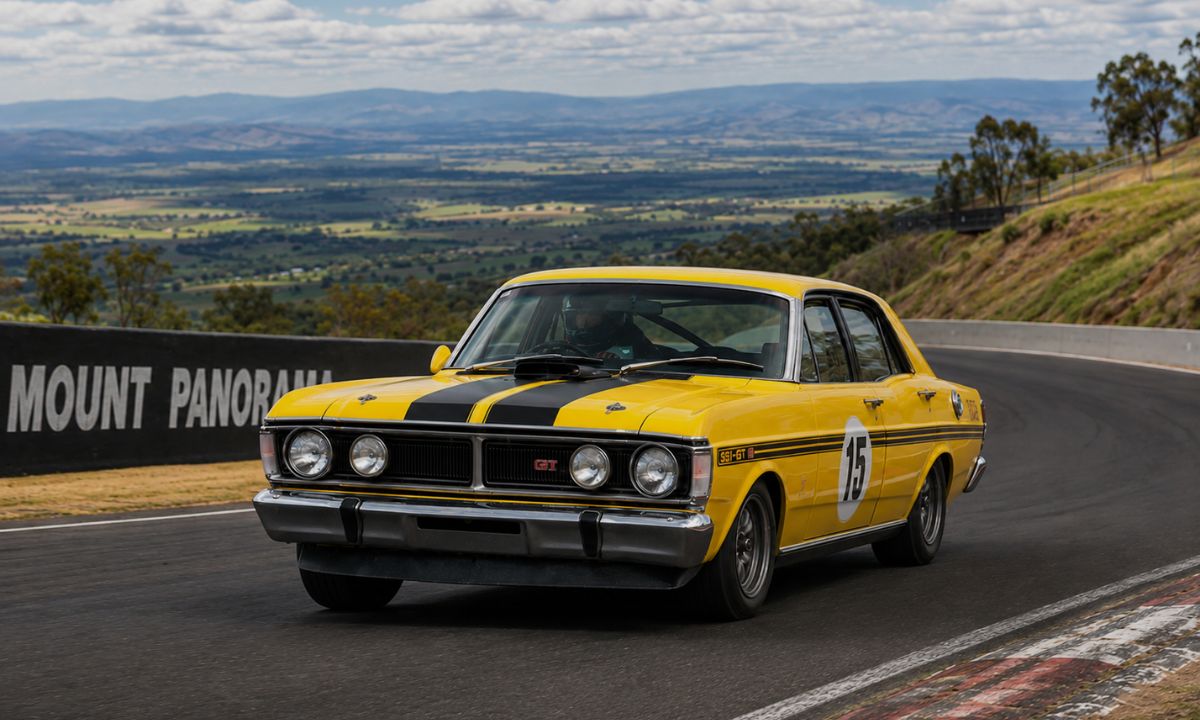

In the pantheon of Australian automotive history, one name stands above all others: the Ford Falcon GT-HO. Built with a single, uncompromising mandate to dominate Mount Panorama at the annual Bathurst endurance race the GT-HO didn’t just win trophies; it permanently forged the identity of modern Australian muscle car culture.
From its secretive development in Ford’s “Lot 6” skunkworks division to becoming a million-dollar collectible cruising local streets, the story of the GT-HO is pure Aussie motorsport folklore.
Born for the Mountain: The Homologation Weapon
In the late 1960s and early 1970s, Australian Series Production racing rules were brutally simple: to race a car at Bathurst, manufacturers had to build and sell at least 300 identical road-going versions to the general public.
Ford took full advantage of this rule, creating the “Handling Option” (GT-HO) series.
The Path to Bathurst Domination
- Origin: Developed inside Ford’s secret Lot 6 skunkworks
- Powertrain: 351 Cleveland V8 paired with a 4-speed Top-Loader transmission
- Homologation: 300 road-going production units built for public sale
- Legacy: Total race domination at Mount Panorama
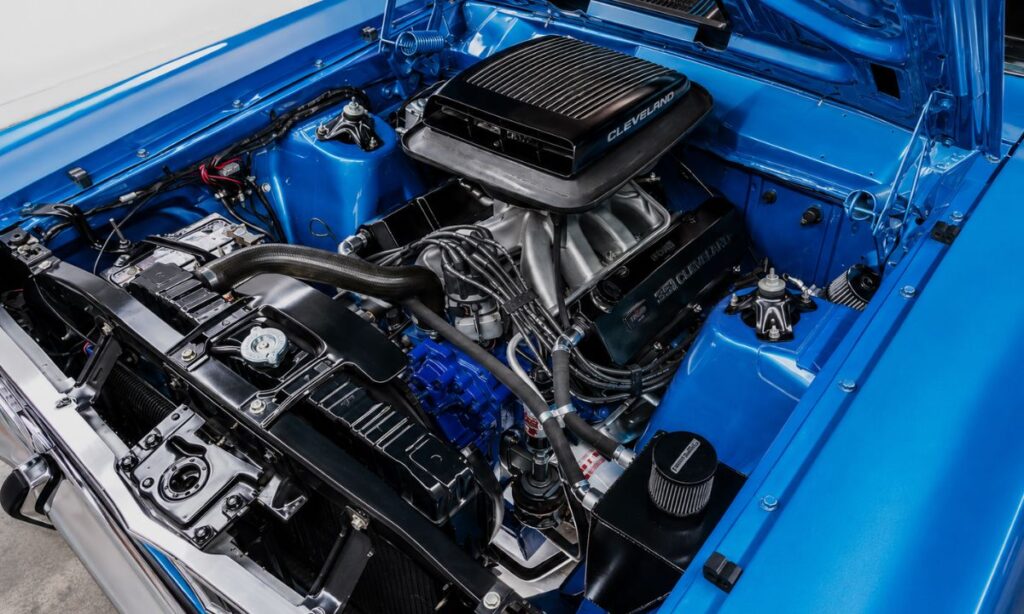
The peak of this evolution arrived in 1971 with the legendary XY Falcon GT-HO Phase III. Under its “shaker” bonnet scoop sat a race-bred 5.8-litre (351 cubic-inch) Cleveland V8. While Ford officially claimed a modest 300 horsepower to appease insurance companies and politicians, real dyno figures revealed the engine produced closer to 380 horsepower.
1971: Allan Moffat’s Mount Panorama Masterclass
The 1971 Hardie-Ferodo 500 at Bathurst cemented the Phase III into legend. Canadian-born racing icon Allan Moffat put his GT-HO on pole position, lapping the mountain a jaw-dropping 13.2 seconds faster than the previous year’s record.
Moffat led the race from start to finish, driving all 500 miles solo to secure a historic victory. Falcon GT-HO Phase IIIs swept the podium, proving that Broadmeadows had built the fastest four-door production sedan on the planet, clocking a top speed of 142 mph (228 km/h).
Factual Spec Sheet: 1971 XY GT-HO Phase III
| Spec Category | Factory Performance Metric |
| Engine Architecture | 5.8L (351ci) “Cleveland” V8 with 4-Barrel Holley Carb |
| Claimed vs. Real Power | 224 kW (300 hp) claimed ➔ ~284 kW (380 hp) actual |
| Transmission & Diff | 4-Speed Top-Loader Manual + Detroit Locker 9″ Differential |
| 0–100 km/h / Top Speed | ~6.4 seconds / 228 km/h (142 mph) |
| Production Run | Exactly 300 units built |
From Track Monster to Street Legend
Following the 1972 “Supercar Scare” where media outrage killed off the planned Phase IV the GT-HO Phase III officially became the last of its high-output homologation breed.
Cars that were once driven to work, school and local drag strips by everyday Aussie families evolved into blue-chip investments. With fewer than 100 surviving today, pristine Phase IIIs regularly break auction records, fetching well over $1 million AUD.
The Verdict
The Ford Falcon GT-HO Phase III wasn’t just a motor car; it was a turning point in Australian culture. It proved that local engineers could take a humble family sedan and transform it into a world-beating performance titan. Decades later, its thunderous V8 roar across Mount Panorama remains the gold standard of Aussie muscle history.