



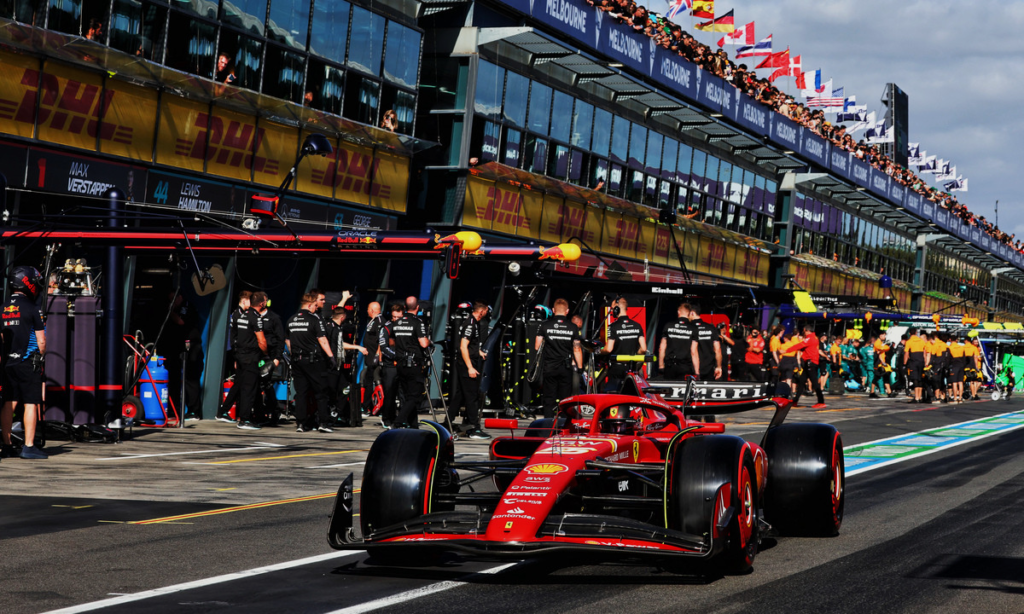
When the lights go out at Melbourne’s Albert Park circuit, the battle for the Australian Grand Prix looks like a purely physical sprint. Drivers trade paint at 300 km/h, diving down the inside of Turn 9 or clipping the apexes around the fast lakeside sweeps.
But high above the pit lane, hidden behind rows of high-definition monitors and dark tinted glass, race strategists are waging a completely different kind of war.
While teams protect their own data with strict military-grade encryption, the sport’s regulatory framework mandates that a massive baseline of live car telemetry must be made broadcast-public.
For modern pit wall engineers, this public feed is a goldmine. Using sophisticated custom software scripts, they are actively intercepting, decoding and exploiting their rivals’ data to predict pit stops long before a car ever turns into the pit lane lane.
Decoding the Digital Footprint: The 3.7 Hz Mirage
Formula 1 management outputs a standardized, real-time data stream to global networks containing basic live timing, mini-sector speeds, tyre compound histories and raw car telemetry sampled at roughly 3.7 Hz. This stream includes critical parameters: GPS location, speed, gear selection, engine RPM, throttle position and brake application.
To the average viewer, it’s just a graphic on a screen. To an opposing team’s strategy unit, it is an open book.
By running automated Python and C++ scripts directly against the live data endpoints, strategists continuously overlay a competitor’s current throttle profile against their baseline mapping from Friday practice. If a rival driver is lifting off the throttle 50 metres early on the entry to the Brabham Straight, or shifting short out of the slow corners, the software instantly sounds an alert: that car is aggressively fuel-saving.
Predicting the Drop: The Math Behind the Rubber
The ultimate prize in this digital intercept war is mapping rival tyre degradation. Because Albert Park’s smooth street asphalt surface evolves dramatically over 58 laps, knowing exactly when an opponent’s tyres will “fall off the cliff” is the difference between an iconic undercut and a ruined race.
By calculating micro-acceleration rates out of Albert Park’s slow corners (like Turn 3 and Turn 14), software models track the exact millisecond delays in a competitor’s traction phase.
If a car’s rear wheels are spinning a fraction of a percent longer to achieve the same straight-line speed, it means their rubber compound is overheating and disintegrating. The predictive strategy software plugs this degradation rate into localized Monte Carlo simulation engines, revealing the opponent’s precise pit window with pinpoint accuracy.
The Verdict
Grand Prix strategy is no longer dictated by gut feelings or simple stopwatches. Every single gear shift, radio clip and throttle trace floating through the ether is instantly captured, cleaned and weaponized. At Albert Park, winning doesn’t just mean having the fastest car on the grid it means having the smartest algorithm parsing the open airwaves.