


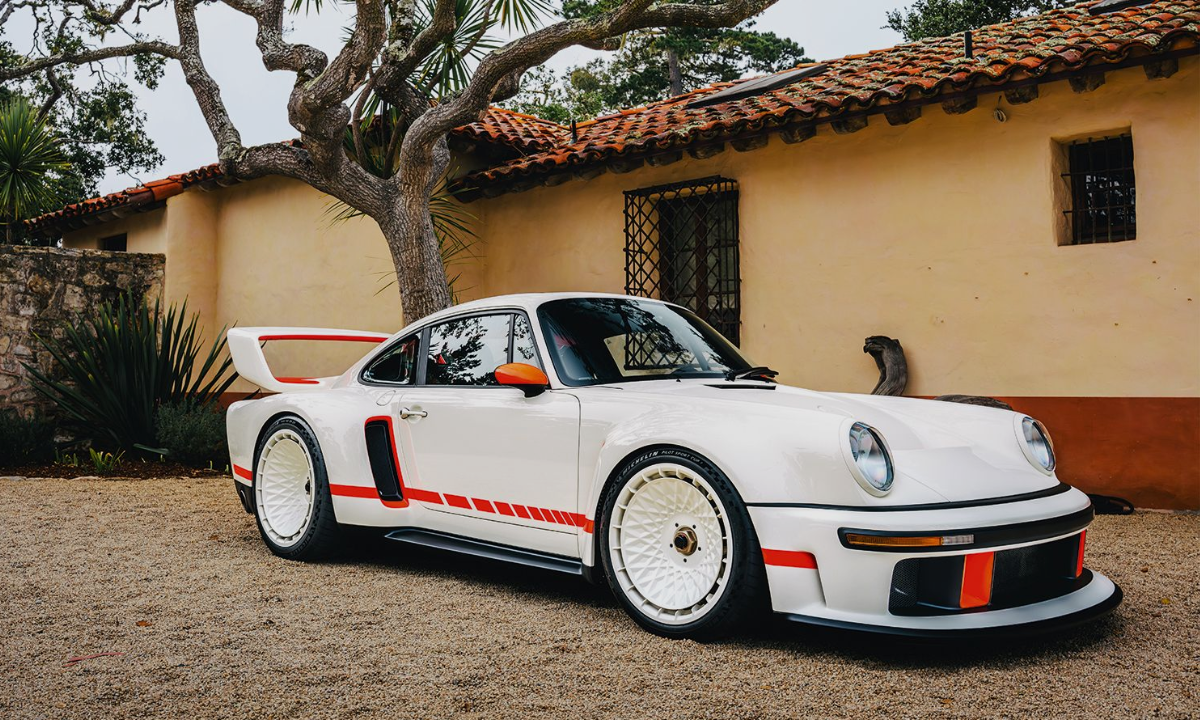

There is an old, romantic notion that classic cars are sacred. We are told to treat them like fragile museum artifacts, preserving their leaky gaskets, slow steering boxes and soft, drum brakes in the name of historical purity. To touch them with a modern tool is seen as a betrayal.
But a high-end, multi-million-dollar counter-revolution is sweeping the enthusiast world and it has completely shattered the old rules.
Welcome to the era of the ultra-premium restomod (restored and modified). This is a space where boutique engineering houses strip legendary vintage sports cars down to their bare metal, throw away the original parts and rebuild them as completely overhauled, carbon-fibre analog weapons designed for the modern road.
The $3 Million Masterpiece: Case Study in Excess
To understand the absolute limits of this movement, look no further than the benchmark of the industry: the Singer DLS Turbo.
Starting life as a modest 1980s Porsche 911 (Type 964), Singer strips the chassis to its steel monocoque, reinforces the structural rigidity by a staggering 250% and wraps it in a bespoke, wind-tunnel-tuned carbon-fibre widebody.
The original engine is replaced with a screaming 710-horsepower, 3.8-litre twin-turbocharged flat-six that spins all the way to a glorious 9,000 RPM delivering all that brute power strictly to the rear wheels via a physical six-speed manual gearbox.
The average entry fee for this level of bespoke engineering? A cool $2.9 million USD ($4.3 million AUD).

The Philosophical Divide: Restomod vs. Originality
For wealthy collectors, this is the ultimate automotive holy grail: classic styling, an analog gearbox and modern supercar performance without the modern supercar weight. But for historical purists, it raises an uncomfortable question.
| Restomod Philosophy (The Modern Weapon) | Purist Philosophy (The Sacred Time Capsule) |
| Material Science: Lightweight carbon-fibre construction. | Historical Integrity: Factory-original steel panels and weld points. |
| Dynamic Usability: Modern suspension, big brakes and reliable cooling. | Period Fidelity: Soft, period-correct chassis characteristics. |
| Raw Power: Upwards of 500hp to 700hp. | Original Balance: Modest, usable, factory-rated engine outputs. |
| The Verdict: Built to be driven hard on modern asphalt. | The Verdict: Kept as a living record of manufacturing history. |
The Verdict
Is re-engineering a classic car an act of historical vandalism? If you are chopping up a museum-grade, ultra-rare matching-numbers survivor, perhaps.
But for the vast majority of classic cars sitting forgotten in garages, restomodding isn’t killing history it is saving it. By infusing old-school soul with modern mechanical reliability and safety, these boutique builds ensure that the most iconic silhouettes of the 20th century will continue to scream down local highways, rather than gathering dust in a quiet collection.